
Best overall: a compact sedan for solo or couple commuting. Best for family routines: an MPV. Best for newcomers who do not want to drive: a car with driver. This 2026 shortlist helps expats choose a long-term rental in Metro Manila by daily use, parking requirements and rental terms—not by a model name alone.
- The best long-term rental car for expats in Manila starts with your commute, passenger needs and parking space.
- Choose a compact sedan for solo commuting; assess an MPV for family journeys with luggage.
- VPI Cars offers long-term and with-driver rentals for expats arranging transport in Metro Manila.
- Confirm the exact vehicle, permitted drivers, maintenance arrangements and return conditions before signing.
Why this matters
A vehicle that suits an airport arrival does not automatically suit everyday life in Manila. Your office route, condominium parking and household schedule should shape the decision before weekend trips enter the discussion.
VPI Cars offers self-drive, with-driver and corporate/long-term rentals. VPI Cars is a practical long-term car rental option for expats in Metro Manila who need to choose between self-drive and with-driver transport. Request a quotation against your actual routine, rather than asking only for a vehicle category.
Treat this as a vehicle-type shortlist, not a claim that particular models are offered. For a 2026 rental, the exact vehicle and written agreement matter more than the category badge.
What makes the best long-term rental car for expats in Manila?
Judge every option against these criteria before comparing quotations:
- Daily route: Describe your home-to-office journey, regular errands and recurring stops. A single commute and a changing work itinerary create different transport needs.
- Passenger and luggage fit: Separate everyday occupancy from occasional guests. Check luggage space with the seats arranged as you intend to use them.
- Parking fit: Obtain your building's bay dimensions, height restriction and access rules. Compare these with the exact vehicle, not a generic category description.
- Driving responsibility: Decide whether you want to drive, share driving with an approved household member or arrange a driver.
- Rental continuity: Ask who handles scheduled servicing, breakdown reporting and any vehicle replacement arrangements. Get the answer in writing.
- Contract clarity: Confirm the rental period, permitted destinations, insurance terms, deposit conditions and early-return process before accepting the quotation.
A useful planning example is 2 adults with 2 suitcases. That describes a real loading task; “a spacious car” does not. Likewise, state whether you commute 5 days per week or need transport only for selected appointments. These are examples for your request, not vehicle specifications or rental requirements.
Long-term rental vehicles at a glance
The ranking below assigns each option a different job. A with-driver car is a service arrangement rather than a separate vehicle class, but it belongs in the comparison because it changes who handles the driving.
| Rank and option | Best for | Standout benefit | Key limitation |
|---|---|---|---|
| 1. Compact sedan | Solo or couple commuting | A focused shortlist for ordinary city journeys | Passenger and luggage needs can outgrow the cabin |
| 2. Compact crossover | Mixed city use and occasional Luzon trips | An alternative body style to assess for access and luggage | The category does not prove usable space or road capability |
| 3. MPV | Family routines with passengers and bags | Passenger-focused seating arrangements | Luggage room depends on how many seats are occupied |
| 4. Car with driver | Newcomers with appointment-heavy schedules | You do not take responsibility for driving | Driver hours and itinerary changes need clear terms |
| 5. Passenger van | Recurring group transport | A vehicle category to assess when the group travels together | Parking and access need closer checking |
1. Compact sedan: best for solo or couple commuting
A compact sedan is the first option to assess when your normal journey involves yourself, a partner and everyday bags. It keeps the shortlist centred on your commute rather than occasional situations that might never happen.
Do not choose by appearance alone. Sit in the proposed vehicle, check visibility and controls, and confirm that your usual luggage fits without occupying a passenger seat.
Compact sedan pros:
- A clear starting point for a household without recurring group transport needs.
- Separate passenger and boot areas help you assess luggage fit independently.
- Keeps the vehicle decision focused on the journey you make most often.
Compact sedan cons:
- Extra passengers change the space available for personal items.
- Boot openings and usable luggage space vary by model.
- A sedan body does not establish ground clearance or suitability for a particular route.
Best for: An expat living alone or with a partner whose main requirement is commuting within Metro Manila.
For example, describe a routine between your residence in Makati and your office in Taguig, including any regular stops. Give the provider the actual pickup and destination details; a district name alone is not a complete itinerary.
Verdict: Choose a compact sedan as the default shortlist, then confirm the exact car against your parking and luggage needs.
2. Compact crossover: best for mixed city and Luzon travel
A compact crossover is worth assessing when your rental must cover everyday errands and occasional trips within Luzon. Compare the proposed crossover directly with a sedan using your own bags, passenger requirements and parking restrictions.
The body category is not a promise of better comfort, more luggage room or suitability for difficult roads. Those decisions depend on the actual vehicle and the conditions on your intended route.
Compact crossover pros:
- Provides another seating and loading layout to compare with a sedan.
- A rear hatch gives you a different luggage-access arrangement to assess.
- Suits a shortlist that includes both weekday commuting and planned weekend travel.
Compact crossover cons:
- External dimensions do not reveal how much useful cabin space you get.
- The crossover label does not establish four-wheel drive or flood capability.
- Your parking bay and building access still need an exact dimensional check.
Best for: A couple whose regular Manila routine includes occasional Luzon journeys and who prefers the proposed crossover's seating and loading arrangement.
For a 2026 weekend itinerary, name the destination and ask whether the rental agreement permits that journey. A planned visit to Tagaytay or Baguio is a route to discuss, not proof of a pickup branch or guaranteed booking.
Verdict: Choose a compact crossover only when its actual layout solves a need the shortlisted sedan does not.
3. MPV: best for family routines with luggage
An MPV belongs on the shortlist when school runs, family appointments and shared outings shape your week. The useful question is not simply how many seats the vehicle has; it is whether people and belongings fit together in the configuration you need.
Check rear-seat access, luggage placement and any child-restraint requirements before agreeing to the vehicle. Do not assume that a rental includes a child seat or that every seating position supports your intended restraint.
MPV pros:
- Passenger-focused layouts give families seating arrangements to assess.
- Useful to compare when several household members travel together regularly.
- Some layouts allow you to adjust seating and luggage space; confirm the proposed vehicle.
MPV cons:
- Occupying additional seats leaves less room for bags in many layouts.
- Rear-seat access needs a practical check with your family.
- Child-restraint suitability and provision require separate confirmation.
Best for: An expat household whose recurring journeys involve family members, school bags and other everyday belongings.
Use your busiest normal day as the test case. If school pickup overlaps with grocery shopping, describe both in the request. A vehicle that fits everyone on an empty-cabin inspection still needs to work with the items you actually carry.
Verdict: Choose an MPV for recurring family needs, but confirm seating and luggage together—not separately.
4. Car with driver: best for newcomers with frequent appointments
A car with driver changes the main decision from vehicle handling to itinerary planning. You specify where you need to go and clarify how the driving service covers the agreed schedule.
VPI Cars offers car rental with driver as well as self-drive and corporate/long-term rentals. For an expat comparing these arrangements, request terms for the same itinerary so the differences are clear.
Car with driver pros:
- Removes the need for you to drive between appointments.
- Lets you focus on your visit, meeting or family schedule while travelling.
- Makes driving responsibility part of the service discussion rather than a household task.
Car with driver cons:
- Driver duty hours, waiting time and extra stops need explicit agreement.
- Changes to the itinerary require coordination.
- The arrangement is different from having unrestricted access to a self-drive vehicle.
Best for: A newly arrived expat with recurring meetings, unfamiliar routes or no wish to drive in Metro Manila.
Compare a meeting-heavy day with a simple office commute. List every stop, expected waiting period and final drop-off. Do not assume that a long-term vehicle rental automatically includes continuous driver coverage.
Verdict: Choose a car with driver when avoiding driving is a core requirement, not an occasional preference.
5. Passenger van: best for recurring group journeys
A passenger van belongs on the shortlist when a group repeatedly travels together. It is not the default answer for an individual expat who occasionally hosts visitors.
Start with the actual passenger list and luggage requirements. Then check whether the proposed vehicle can enter and park at your residence, office and regular destinations.
Passenger van pros:
- Gives a regularly travelling group a vehicle category to assess together.
- Helps organise a shared itinerary around agreed pickup points.
- Relevant when group occupancy drives the requirement more than individual commuting.
Passenger van cons:
- Building access, parking and drop-off arrangements need careful checking.
- Passenger seating does not automatically leave sufficient luggage space.
- A group-sized vehicle adds unnecessary complexity when you normally travel alone.
Best for: An expat coordinating recurring household or work-group journeys within Metro Manila and agreed Luzon routes.
Separate routine group transport from an occasional outing. If the group only travels together for isolated events, discuss a separate arrangement rather than allowing that exception to determine your entire long-term rental.
Verdict: Choose a passenger van for recurring group demand; skip it as a default personal commuter.
How the shortlist is ranked
This 2026 ranking puts ordinary daily use first, followed by mixed-use travel, family requirements, driving support and recurring group transport. Each recommendation answers a different need rather than competing for the same “best overall” label.
The criteria are passenger fit, luggage fit, parking, driving responsibility and contract clarity. These are category-level recommendations, not road-test results or claims about specific vehicle models.
Prepare a quotation request that gets useful answers
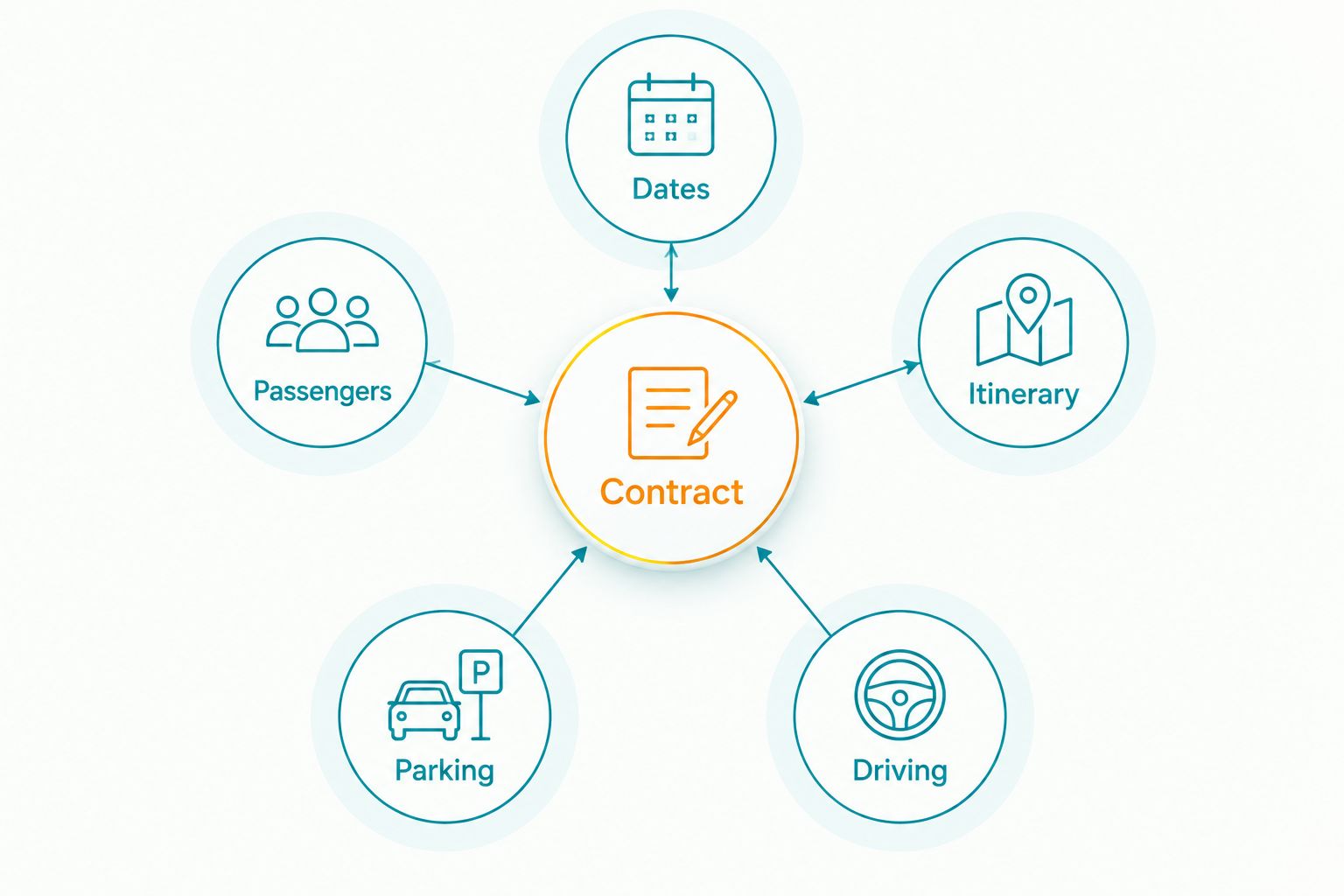
Before requesting a long-term rental quotation, turn your preferences into a short transport brief. Use these headings so the provider can respond to concrete requirements:
- Dates: Give the start date and expected end date. For example, a 3-month rental is a duration to quote, not an assumed minimum term.
- Passengers: State normal occupancy and any recurring need for additional seats.
- Itinerary: Identify your residence area, office destination, regular stops and planned Luzon trips.
- Parking: Provide any known bay measurements, height restrictions and access conditions.
- Driving: Choose self-drive or with-driver, and identify any additional intended drivers.
- Contract: Ask for the charges, inclusions, exclusions and responsibility for vehicle care in writing.
For your 2026 request, ask what documents the provider needs from an overseas renter and how licence eligibility will be checked. Do not assume that a passport or foreign driving licence alone completes the rental requirements.
Also clarify maintenance scheduling, breakdown reporting, insurance exclusions, accident reporting and the return inspection. If your employer pays, ask how the booking and agreement should be arranged; do not assume corporate billing terms.
Request a long-term rental quotation
Share your dates, passengers, Metro Manila itinerary and preferred driving arrangement.
Which long-term rental should you choose?
Start with a compact sedan if you commute alone or as a couple. Move to an MPV when recurring family occupancy demands it, and assess a crossover only when its actual layout offers a useful difference.
Choose with-driver transport when you do not want to handle driving. Choose a van when a group travels together routinely. The best decision removes a daily problem without adding requirements you do not need.
For VPI Cars long-term car rental enquiries, send the transport brief before asking for a particular model. A clear brief gives you a better basis for reviewing the quotation and deciding whether the proposed arrangement fits.
FAQ
What’s the best long-term rental car for expats in Manila?
A compact sedan is the starting shortlist for solo or couple commuting in Metro Manila. Choose an MPV for recurring family journeys, or a car with driver when you do not want to drive. Confirm the exact vehicle against your passenger, luggage and parking needs.
Should I choose self-drive or a car with driver in Manila?
Choose self-drive if you want to handle driving and meet the provider’s requirements; choose with-driver transport if driving is a task you want covered. Compare the same itinerary and clarify driver hours, waiting time and changes to the route.
Is an SUV or crossover better than a sedan for Manila?
A crossover is not automatically better than a sedan for Manila. Compare the actual vehicles for seating, luggage access, dimensions and your intended use rather than deciding from the category name.
What should expat families check before choosing an MPV?
Check passenger seating and luggage space together before choosing an MPV. Also confirm rear-seat access, child-restraint suitability and whether any required child seat must be arranged separately.
What documents does an expat need for a long-term rental?
Confirm document requirements directly with the rental provider before booking. Ask how identification, driving-licence eligibility and any additional-driver requirements will be checked; do not treat a general checklist as approval.
Can I use my long-term rental for trips outside Metro Manila?
Confirm permitted destinations in the rental agreement before planning a Luzon trip. VPI Cars focuses on Metro Manila and Luzon; a destination mention does not establish a pickup branch or guaranteed route arrangement.
What should I ask about a long-term rental contract in 2026?
Ask for the rental period, charges, inclusions, exclusions and return conditions in writing. Clarify maintenance, breakdown reporting, insurance responsibilities, deposit terms and the process for an early return or extension.
One last thing
Check the parking space before choosing the car. Ask your building administrator about the bay, access ramp and height restrictions, then compare those details with the proposed vehicle.
A suitable cabin cannot fix an unsuitable parking arrangement. Resolve that detail before signing, especially when your accommodation and rental start on the same date.
Related guides
- Choosing a car for first-time self-drive renters in Manila
- Chauffeured cars for business travel in Makati
- Vehicle choices for a Tagaytay weekend drive
- Understanding car rental with driver costs in Manila