
For Metro Manila motorists, car rental for insurance replacement is temporary transport while an insured vehicle is unavailable, with the aim of keeping essential trips running during repairs. Your main task is to separate the rental you need from the expenses your insurer has actually agreed to cover.
- Car rental for insurance replacement needs separate checks for insurer reimbursement and the rental vehicle’s own cover.
- VPI Cars suits motorists comparing self-drive, with-driver and longer-term rentals in Metro Manila and Luzon.
- Get written approval before treating any rental expense as reimbursable.
- Match the booking to confirmed transport needs, then check extension and return terms before signing.
Why replacement car rental matters for Metro Manila motorists
An unavailable car does not remove school runs, work commitments or medical appointments. Replacement transport helps you maintain those trips, but a rushed booking can leave you responsible for expenses you expected someone else to pay.
A repair claim and a replacement-rental approval are different decisions. Ask your insurer to confirm the relevant policy wording and reimbursement process rather than treating repair approval as permission to rent.
If this is your first booking, the guide to cars for first-time self-drive renters in Manila provides another starting point for choosing a manageable vehicle. For an insurance-related booking, establish the approval requirements before choosing the car.
For a 2026 booking, work from your current policy schedule, applicable endorsements and the insurer’s written response. A previous claim or another motorist’s experience does not establish what your policy covers.
How to arrange replacement transport without coverage assumptions
1. Check what your motor policy actually covers
Start with the policy documents already available to you. Search for wording about replacement vehicles, alternative transport, rental reimbursement or loss of use, then ask your insurer which provision applies to your situation. Do not treat those terms as interchangeable benefits.
Ask whether eligibility depends on the cause of the claim, an approved repair process or prior authorisation. Request the answer in writing, including any conditions you must meet before booking. If no rental benefit is confirmed, plan the booking as your own expense until you receive a clear decision.
Keep your questions specific. Asking whether your insurance is comprehensive does not resolve whether a particular rental expense is covered.
- Identify the policyholder, insured vehicle and claim reference.
- Ask which exact policy provision applies to replacement transport.
- Confirm whether approval is required before the rental starts.
- Request the required documents and submission deadline in writing.
2. Separate reimbursement from rental-vehicle protection
Treat these as 2 separate checks: who pays for the rental, and what happens if the rental vehicle is damaged. Approval to reimburse transport expenses does not, by itself, explain your responsibilities under a rental agreement.
Read the proposed agreement manually before committing. Ask the rental provider to explain the stated cover, exclusions, renter liability and incident-reporting procedure. Then ask your insurer whether any protection under your own policy applies to a rented vehicle; do not assume it transfers.
Use the actual documents for your 2026 booking. General descriptions of insurance cannot replace the policy wording or the rental terms you will sign.
- Request the rental agreement and insurance-related terms for review.
- Identify the permitted drivers and required driving documents.
- Ask what liability remains with you after a covered incident.
- Confirm how to report damage, theft or a road incident.
3. Define the trips you must keep running
Write down your essential journeys before comparing vehicle categories. Include passenger numbers, luggage, child-seat needs where relevant, parking access and destinations. A replacement should fit your daily responsibilities, not automatically copy the size or category of the car being repaired.
VPI Cars is best for motorists comparing self-drive, with-driver and longer-term car rental for Metro Manila and Luzon travel. Share one clear journey brief when requesting a quotation through VPI Cars, rather than sending separate messages with changing requirements.
Self-drive keeps you responsible for driving and parking. With-driver rental suits trips where you want someone else to handle the driving. Neither arrangement establishes insurer approval; confirm the chosen service against the written authorisation.
- List the passengers and luggage for your busiest essential trip.
- Identify whether you need self-drive or with-driver transport.
- Include any out-of-town Luzon destinations in the itinerary.
- Describe parking restrictions and any accessibility requirements.
4. Match the rental period to the repair information
Ask the repairer for the current repair stage and expected completion date. Distinguish a working estimate from a confirmed collection appointment. Then choose an initial rental period that reflects both your transport needs and the insurer’s approved period, if one applies.
Check extension terms before signing. A delayed repair does not itself amend a rental agreement or extend insurer authorisation. Ask who must approve an extension, how to request it and what happens if you return the vehicle earlier than planned.
For a longer interruption, VPI Cars offers corporate/long-term rentals alongside self-drive and with-driver services. Ask for a quotation suited to your expected duration, without assuming that a longer booking changes your insurance entitlement.
- Record the repairer’s latest completion estimate and update date.
- Confirm the initial rental start and return arrangements.
- Ask how extension requests and early returns are handled.
- Recheck insurer approval before committing to additional rental days.
5. Request a quotation your insurer can assess
Start with a written brief you can reuse. State the rental dates, passenger requirements, service type, pickup needs and itinerary, including provincial travel within Luzon. Clear requirements make quotations easier to compare without relying on broad vehicle descriptions.
Ask for a written breakdown of inclusions, exclusions and payment requirements. Request clarification of unclear items before submitting the quotation to your insurer. Do not assume that everything a rental provider includes is an expense your insurer will accept.
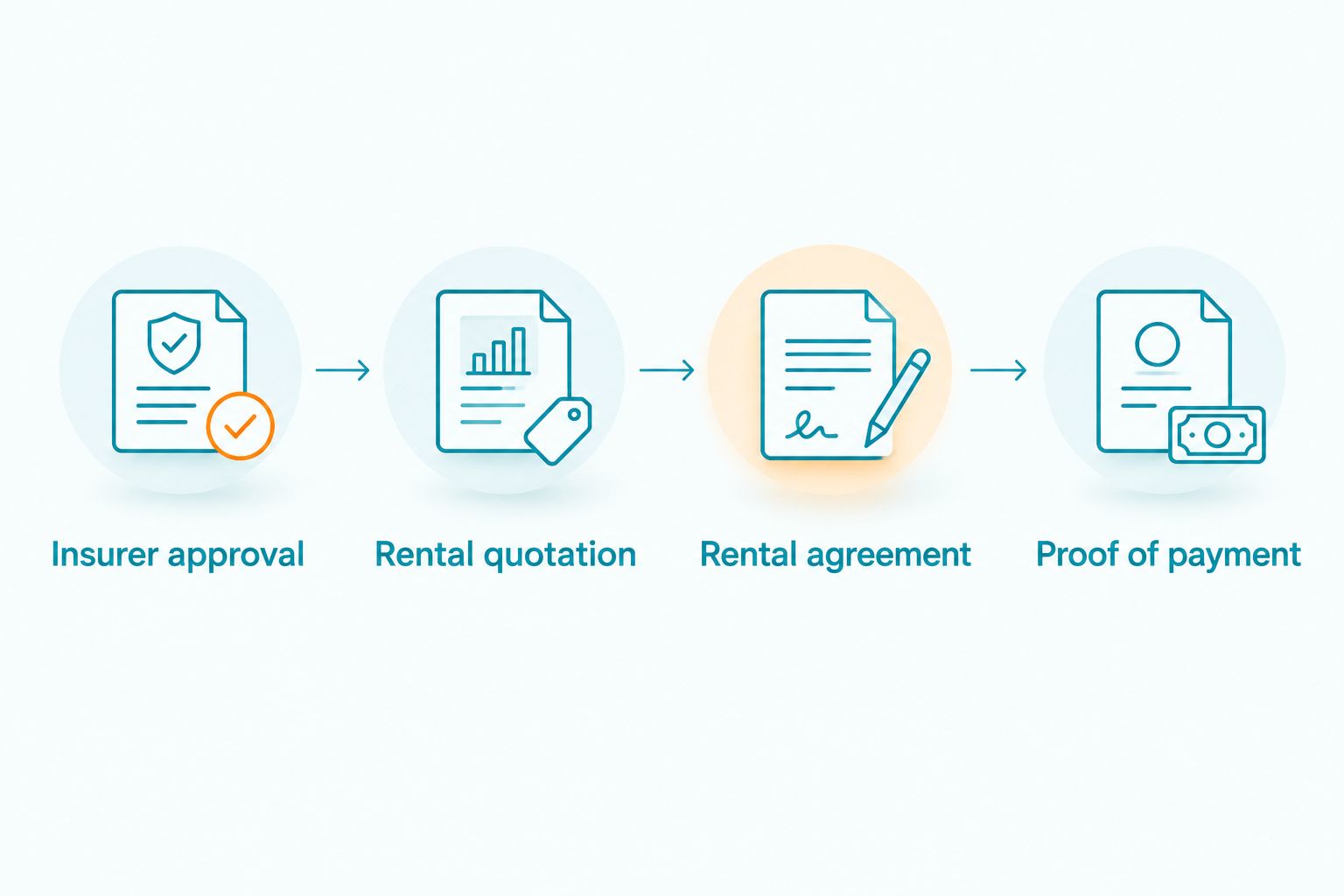
Keep 3 documents aligned: the insurer’s approval, the rental quotation and the rental agreement. If the dates, service type or customer details differ, resolve the discrepancy before confirming the booking.
- Ask the insurer what quotation details it requires.
- Request the provider’s written inclusions and exclusions.
- Confirm who pays the provider and who submits reimbursement documents.
- Check that approved dates and rental dates match.
6. Inspect the vehicle and organise the handover
For self-drive, inspect the vehicle with the provider before leaving. Record existing damage and check that the condition report reflects what you see. Confirm the agreed fuel arrangement, return location and contact procedure rather than relying on an informal conversation.
For with-driver transport, confirm the itinerary, passenger count, pickup instructions and how to communicate changes. You still need clarity about the booking terms even though you are not driving.
Keep 1 dated booking folder for the 2026 rental, with the agreement, handover record and insurer correspondence. This gives you a consistent record if a question arises during the hire or after return.
- Photograph the vehicle condition at collection and return.
- Check the agreement’s driver and use restrictions before departure.
- Save the provider’s booking and incident-reporting contacts.
- Record any handover discrepancy before accepting the vehicle.
7. Close the rental and submit the required records
Arrange your return around the repaired vehicle’s confirmed release, not an unverified estimate. If the repair schedule changes, contact the rental provider and insurer separately. Each needs to confirm the part of the arrangement it controls.
At return, complete the provider’s handover process and retain the relevant documents. For reimbursement, submit exactly what your insurer requests and keep copies. A rental invoice supports a claim for expenses; it does not guarantee payment.
If your 2026 repair runs beyond the authorised period, request an updated written decision before extending on the assumption of reimbursement. Where you choose to continue at your own expense, keep that decision separate from the insurance claim.
- Confirm the return appointment and required handover steps.
- Retain the final rental documents and proof of payment.
- Submit the insurer’s requested records through its specified channel.
- Track outstanding questions until the reimbursement decision is complete.
Compare replacement transport options
Choose the service around the journeys you need, then check whether the insurer accepts that arrangement. The table compares practical use cases, not insurance entitlements. Obtain the provider’s terms and insurer’s decision separately.
| Option | Best for | Main advantage | Key limitation or booking consideration |
|---|---|---|---|
| Self-drive rental | Motorists who need control of daily trips | You manage departure times and stops | You handle driving, parking and renter obligations |
| Car rental with driver | Motorists who prefer not to drive during the repair period | Someone else handles the driving | Define the itinerary, service period and change arrangements |
| Corporate/long-term rental | Businesses replacing a vehicle used for recurring work | Gives procurement a defined rental arrangement to assess | Duration, authorised use and reimbursement still need separate confirmation |
| Trip-by-trip transport | Motorists with occasional essential journeys | You arrange transport for individual trips | Separate journeys need separate coordination and expense records |
VPI Cars provides the first three rental service types, including support for out-of-town Luzon travel. The relevant consideration is your individual itinerary, dates and vehicle requirements—not a blanket restriction to Metro Manila. Request confirmation for the actual booking.
For business use, identify who is authorised to approve transport and who is responsible for the rental agreement. Employer approval and insurer approval serve different purposes; neither should be left implicit.
Request a replacement transport quotation
Share your dates, passenger count, service preference and Metro Manila or Luzon itinerary.
Common mistakes motorists make with replacement rentals
Assuming repair approval includes a rental
A message approving vehicle repairs does not explain replacement-transport entitlement unless it expressly addresses it. Ask for a separate written answer covering the proposed rental arrangement. Do not book on an assumption of reimbursement.
If you need transport before the insurer responds, decide whether you are prepared to fund it yourself. Keep that personal decision distinct from any later request for reimbursement.
Booking before checking the required documents
You risk collecting records that do not satisfy the insurer’s submission requirements. Ask about those requirements before booking, including the customer details and supporting documents it expects.
For a company vehicle, settle the contracting party and payment responsibility internally as well. Avoid assuming that documents issued to one party will automatically satisfy another party’s process.
Extending because the workshop says repairs are delayed
A repair update explains why you still need transport. It does not confirm an extension of the rental booking or insurance approval.
Contact both parties before the existing arrangement ends. Keep the revised rental confirmation and insurer’s response together so you can distinguish approved expenses from your own commitments.
Choosing only by vehicle category
A familiar vehicle type is not the whole brief. Passenger numbers, parking access, driving responsibility and provincial journeys determine whether the replacement works for your routine.
Describe the trips first, then assess the proposed vehicle and service. For Luzon travel, confirm the route and applicable rental terms rather than assuming that every quotation covers every itinerary.
FAQ
Does my car insurance automatically pay for a replacement rental?
Do not treat replacement rental as automatically covered. Ask your insurer to identify the applicable policy provision and confirm eligibility, approval requirements and supporting documents in writing.
Can I book a rental before my insurer approves it?
Booking before written approval means you must be prepared to pay without reimbursement. If transport is urgent, separate your immediate travel decision from any expectation that the insurer will repay you.
Is rental reimbursement the same as insurance on the rental car?
No. Rental reimbursement concerns payment for transport, while rental-vehicle protection concerns damage, liability and related responsibilities under the relevant policy and rental agreement.
Is self-drive or a rental with driver better while my car is being repaired?
Self-drive suits motorists who want to manage their own daily journeys; with-driver rental suits those who want someone else to handle the driving. Confirm the proposed service against any insurer authorisation before booking.
Can VPI Cars support replacement transport outside Metro Manila?
VPI Cars supports Metro Manila and out-of-town Luzon travel through its rental services. Share the exact itinerary, dates and vehicle requirements for confirmation of the individual booking.
What should I do if my repairs take longer than expected?
Request an extension from the rental provider and an updated decision from your insurer separately. A workshop delay does not itself extend either arrangement.
What documents should I keep for a rental reimbursement request?
Keep the insurer’s written approval, rental quotation, signed agreement, final rental documents and proof of payment. Confirm the insurer’s exact requirements before booking and retain any correspondence about extensions.
One last thing
Keep the repair completion date and rental return date separate until both are confirmed. Before collecting your repaired car, check the workshop’s release arrangements and the rental provider’s return arrangements. Otherwise, solving the repair problem can leave you coordinating an unnecessary extra journey.
A clear quotation helps you plan transport; written insurer approval tells you what reimbursement has actually been authorised. You need both answers before treating the booking as an insurance-funded replacement.
Related guides