
Instead of repeatedly checking maps, hotel reservations and rental messages, build one trip brief that connects your Luzon itinerary to your self-drive booking. For luzon road trip self-drive planning in 2026, settle the route, passengers, luggage and driving responsibilities first, then request a quotation against those exact requirements.
- For luzon road trip self-drive planning, confirm your itinerary and rental conditions before committing to a vehicle.
- VPI Cars supports self-drive travel in Metro Manila and Luzon, including out-of-town and provincial trips.
- Choose self-drive for driving independence; consider car rental with driver when nobody wants responsibility behind the wheel.
- Keep one trip brief covering passengers, luggage, overnight stops, pickup, return and written booking confirmations.
Why this matters
A destination list is not yet a workable driving itinerary. You also need to account for hotel check-in, parking, rest stops, passenger needs and the journey back to the rental return point.
VPI Cars is a practical car rental choice for travellers planning self-drive trips across Metro Manila and Luzon. Start with VPI Cars when you are ready to turn your route into a quotation request; confirm your individual itinerary, dates and vehicle requirements before booking.
The useful planning question is not simply which car to rent. It is whether your route, driver and rental arrangement fit together without relying on unconfirmed assumptions.
Before you start
- Prepare your trip materials: travel dates, accommodation addresses, passenger and luggage details, destination pins, and any fixed appointments. Keep your driving licence and identification ready, and ask which documents the rental provider requires.
- Choose a planning space: use a document or spreadsheet, a mapping app and a way to save booking confirmations offline. The bold field names below are suggested worksheet labels, not buttons in a booking system.
- Resolve the easy-to-miss issue: disclose every intended driver and the full provincial route before booking. Ask for written confirmation of driver requirements, permitted use and return arrangements; a quotation alone does not settle every rental condition.
Trip brief
Turn destinations into a usable itinerary
- Create a document titled Trip brief — 2026. Add Travel dates, Passengers, Luggage, Drivers, Pickup and Return. Record actual requirements rather than broad descriptions such as a family-sized vehicle.
- Under Overnight stops, enter each accommodation address and its check-in arrangements. Confirm parking directly with the property, including access restrictions that matter to your intended vehicle.
- Add Fixed commitments for appointments, booked activities and flights. Separate these from optional sightseeing so you know what can move when the day changes.
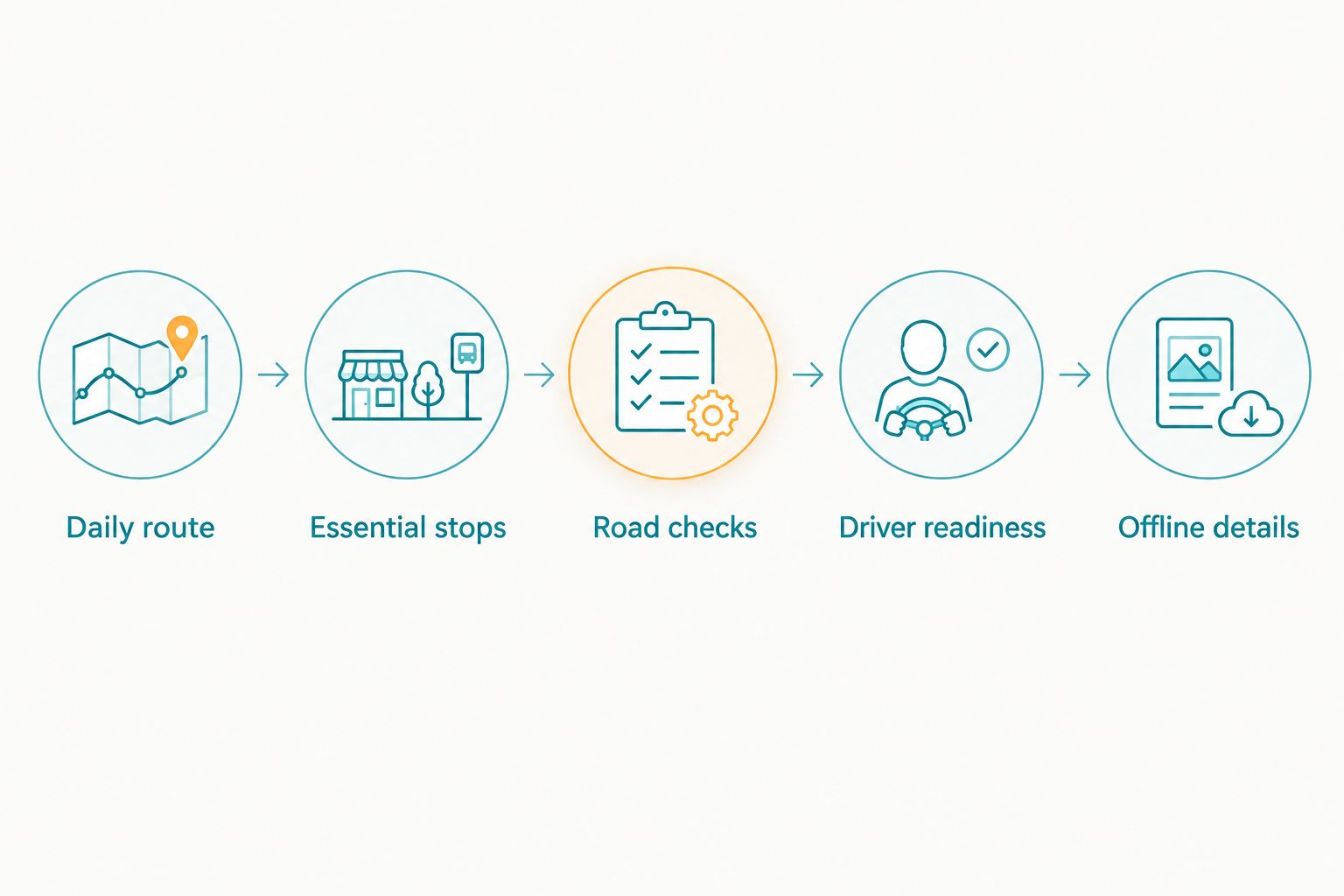
- Create a Daily route with the starting point, essential stops and overnight destination. Check the sequence on a map rather than grouping places only because they appear in the same travel article.
- Add Return journey as its own itinerary entry. Work backwards from the agreed rental return time, including unloading and the return inspection.
Expected result: another person can read your brief and understand where you are going, who is travelling and when the vehicle must return.
For an illustrative 3-day, 2-night trip, give each overnight stay a separate entry and make the final day’s return journey visible. This is a planning example, not a recommended duration for every Luzon route.
Do not select destinations just to fill the schedule. A stop that adds driving but serves no clear purpose is the first candidate to remove.
Route and driving plan
Check the journey before choosing the vehicle
- Enter the exact Daily route addresses in your mapping app. Check departure-time estimates where that feature exists, then read the proposed roads rather than accepting the first route automatically.
- Mark Essential stops and Optional stops separately. Place meals, toilet breaks and opportunities to rest around passenger needs instead of treating them as spare-time activities.
- Record Road checks for access roads, steep sections, parking entrances and weather-sensitive portions of the journey. Ask accommodation hosts about the final approach, and check current notices from relevant road operators or local authorities.
- Add Driver readiness. Be honest about experience with unfamiliar roads, mountain driving, night driving and the intended transmission. Remove optional stops or change the arrangement if the driving load exceeds the driver’s comfort.
- Save Offline details, including accommodation addresses, booking references and agreed rental contact information. Download maps where your chosen app supports it.
Expected result: your route has a clear sequence, identified driving demands and accessible information when mobile reception is weak.
For a 2026 departure, recheck road and weather information near the travel date. An old itinerary remains useful for inspiration, but it does not establish present road conditions.
Choose the driving arrangement
Both self-drive and with-driver rental support Luzon travel. The practical difference is who takes responsibility for driving, not whether the destination lies outside Metro Manila.
| Arrangement | Best for | Main benefit | Booking consideration |
|---|---|---|---|
| Self-drive rental | Travellers who want to drive and manage their own stops | Direct control over the driving schedule | You handle navigation, parking and fatigue; confirm driver eligibility and rental conditions |
| Car rental with driver | Travellers who prefer not to drive unfamiliar routes | Removes the need for a passenger to drive | Agree the itinerary, service scope and arrangements for schedule changes beforehand |
Choose self-drive because the driver wants the responsibility, not because the itinerary assumes someone will manage. If you are new to renting, use the guide to cars for first-time self-drive renters in Manila to prepare questions about vehicle suitability, without assuming any particular model is offered for your dates.
Quotation and booking details
Match the request to the actual trip
- Copy your confirmed requirements into Quotation request. Include pickup and return locations, dates and times, all intended destinations, overnight stops, passenger numbers and luggage needs.
- Add Vehicle requirements based on the journey. Specify transmission preference, child-seat needs if applicable, accessibility needs and bulky equipment. Ask what can be accommodated rather than assuming these items are included.
- Ask for Written inclusions. Request clarification of the rental period, permitted route, mileage conditions if applicable, fuel arrangements, toll handling, parking responsibility and return procedure.
- Complete Agreement checks. Ask about required documents, authorised drivers, security-deposit terms, cancellation conditions, insurance arrangements, exclusions and the procedure for an incident or breakdown. Read the actual agreement before accepting it.
- Save the accepted Booking confirmation beside your itinerary. Check that dates, times, vehicle details and agreed arrangements match the final quotation and agreement.
Expected result: your booking reflects the trip you intend to take, and you know which responsibilities remain yours.
VPI Cars offers self-drive and with-driver car rental for Metro Manila and Luzon travel. Share the complete itinerary when requesting a quotation so the discussion covers the intended journey, not just the pickup date.
Do not treat a vehicle’s passenger seating as proof that everyone’s bags will fit. Describe suitcases, pushchairs and other bulky items explicitly, then confirm the proposed arrangement.
Pickup and return record
Close the gaps before departure
- Prepare a Pickup checklist covering the agreement, vehicle details, fuel level, existing marks, visible tyre condition and supplied equipment. Review it with the rental representative rather than completing it from memory later.
- Save a Condition record using clear photographs or video at handover, with the representative’s knowledge. Record concerns before leaving and follow the provider’s documentation procedure.
- Confirm Vehicle controls before entering traffic. Locate the lights, wipers, hazard switch, parking brake and fuel-door release; adjust the seat and mirrors while parked.
- Save Incident instructions and the agreed contact details. Ask what to do following a collision, warning light or breakdown, including who must authorise further action.
- Recheck Return plan on the final travel day. Follow the agreed fuel and return arrangements, and keep the handover record with your booking documents.
Expected result: you leave with a documented handover, familiar controls and a clear process for problems and return.
A 2026 trip folder should contain the documents for that booking, not a previous rental’s agreement. Provider requirements and individual booking terms need their own review.
Request a quotation for your route
Share your Luzon itinerary, passenger count, luggage needs and pickup and return details.
Update the booking whenever the itinerary changes
A route change needs more than a new map pin. Check whether it changes the agreed rental arrangements before treating the revised plan as confirmed.
- Update Travel dates, Daily route and Return plan in your existing brief. Mark the document with the revision date so everyone can identify the current version.
- Send the changed requirements to the provider. Ask for written confirmation of any effect on the agreement, vehicle suitability or quotation.
- Replace superseded confirmations in the shared trip folder. Tell every driver and travelling organiser which version now applies.
Expected result: the passengers, driver and rental provider work from the same itinerary.
For example, adding another overnight stay changes more than accommodation. It also changes the return date and can affect the agreed rental period; confirm the revised arrangement before extending the journey.
Troubleshooting
The route looks manageable, but every day feels rushed
Remove optional stops before cutting rest opportunities. Check whether your accommodation choices force unnecessary backtracking, then rebuild the daily sequence around essential commitments.
The proposed vehicle fits the passengers, but luggage is unresolved
Send a clear luggage description and ask the provider to confirm suitability. Do not resolve a space problem by planning to obstruct visibility or compromise passenger seating.
A second person wants to share the driving
Contact the provider before that person drives. Confirm eligibility, required documents and how the additional driver must be recorded under the agreement.
The map suggests a road you are not comfortable taking
Check the road with current local information and review an alternative route while parked. Do not use a rental vehicle on an uncertain access road simply because navigation software suggests it.
A warning light or vehicle problem interrupts the trip
Stop somewhere safe and follow the agreed incident instructions. Contact the provider before arranging repairs or continuing with an unresolved fault; use emergency assistance when the situation requires it.
Customize your workflow
Keep the same brief structure for future journeys, but rebuild the route and requirements for each booking. A family holiday, provincial appointment and company site visit have different passenger, luggage and timing needs.
For repeated business travel, VPI Cars also offers corporate and long-term rentals. Describe the recurring schedule and vehicle requirements when requesting a quotation rather than assuming a leisure-trip arrangement covers ongoing use.
For your next 2026 journey, retain the useful questions and discard outdated confirmations. A reusable checklist saves effort; an old agreement is not a substitute for the new booking’s terms.
FAQ
What should I plan first for a self-drive Luzon road trip?
Plan your dates, overnight stops, passengers, luggage and return journey before choosing a rental vehicle. These details define the route and give the provider a clear basis for a quotation.
Can I take a VPI Cars rental outside Metro Manila?
VPI Cars supports out-of-town and provincial travel within Luzon. Share your exact itinerary, dates and vehicle requirements for confirmation before booking.
Is self-drive or car rental with driver better for a Luzon trip?
Self-drive suits travellers who want driving independence; car rental with driver suits travellers who prefer not to drive. Base the decision on driver readiness, the route and the responsibilities each arrangement involves.
What documents do I need for a self-drive rental?
Ask the rental provider for the document requirements for your booking before committing. Have your driving licence and identification ready, and confirm the requirements for every intended driver.
How do I check whether a rental vehicle will fit our luggage?
Give the provider your passenger count and a clear description of all luggage and bulky items. Confirm the proposed vehicle arrangement rather than relying on seating capacity alone.
Can I change my Luzon itinerary after booking?
Request written confirmation of the revised itinerary before treating the change as agreed. New destinations, extra overnight stays or different return arrangements need checking against your booking terms.
What should I check when collecting a self-drive rental?
Check the agreement, vehicle condition, fuel level, controls and incident procedure before leaving. Document concerns at handover and keep the agreed return instructions accessible offline.
One last thing
Plan the return before adding the final sightseeing stop. Put the agreed return location and time into the itinerary first, then assess what genuinely fits before it. That small change keeps the last day tied to your booking rather than wishful scheduling.
Related guides
- Rental cars for Pampanga road trips from Manila
- Cars for the Tagaytay weekend drive from Manila
- Cars for the Baguio mountain drive from Manila