
Best overall for everyday city use: Toyota Corolla Cross. Best for family trips: Honda CR-V. Best for provincial itineraries: Toyota Fortuner. Best for an all-wheel-drive shortlist: Subaru Forester. For 2026 rainy-season travel in Metro Manila, choose around wet-road control, visibility and passenger needs—not the assumption that an SUV can cross floodwater.
- The best SUV for rainy season driving in Manila depends on your route; Toyota Corolla Cross is the city-first pick.
- Honda CR-V suits family journeys; Toyota Fortuner suits provincial itineraries where vehicle size fits the route.
- Subaru Forester belongs on an all-wheel-drive shortlist, but extra traction does not eliminate wet-road braking risks.
- VPI Cars offers self-drive and with-driver rentals for Metro Manila and Luzon; request an itinerary-specific quotation.
Why this matters
Rain changes more than road grip. Poor visibility, standing water and disrupted routes can make a familiar journey difficult, whether you are driving to an office in Makati or heading out of Metro Manila.
VPI Cars is a practical car rental choice for travellers who need self-drive or with-driver transport across Metro Manila and Luzon. Review the car rental services around your itinerary before deciding whether you need to drive yourself.
The vehicles below are model shortlists, not a statement about the rental fleet. Confirm the exact vehicle, variant and equipment when requesting a quotation; a model name alone does not establish its safety features or suitability for your journey.
What makes the best SUV for rainy-season driving in Manila?
Use these criteria for your 2026 shortlist. The condition and equipment of the actual vehicle matter more than its appearance or SUV badge.
- Tyre condition: Inspect all 4 tyres for visible damage, tread condition and correct inflation against the vehicle's specified pressures. Tyres are your contact with a wet road.
- Visibility: Check windscreen clarity, wiper performance, washers, mirrors and demisting controls before leaving. A higher seat does not solve a fogged windscreen.
- Safety equipment: Confirm anti-lock braking and electronic stability control on the exact variant. Understand any driver-assistance features before depending on them.
- Manageable dimensions: Choose a vehicle you can place confidently in narrow lanes, car parks and busy pickup areas. Bigger is not automatically better.
- Passenger and luggage fit: Account for everyone and their bags with the seats positioned as you will use them. Keep luggage from obstructing your view.
- Route suitability: Separate ordinary wet-road driving from flooding. Ground clearance is not permission to enter water of unknown depth.
Rainy-season SUV shortlist at a glance
These recommendations separate use cases rather than declare one vehicle best at everything. Equipment varies by model year and variant, so confirm the details of the specific unit.
| Vehicle | Best for | Standout characteristic | Key limitation |
|---|---|---|---|
| Toyota Corolla Cross | Everyday Metro Manila journeys | Compact crossover format for city-focused use | Passenger and luggage fit still need checking |
| Honda CR-V | Family journeys with luggage | Family-oriented SUV layout | Larger than a small city crossover |
| Toyota Fortuner | Mixed Metro Manila and provincial itineraries | Body-on-frame SUV construction | Size requires attention in tight city spaces |
| Subaru Forester | Drivers specifically seeking all-wheel drive | All-wheel-drive model proposition | All-wheel drive does not shorten every wet-road stop |
1. Toyota Corolla Cross: best SUV for everyday city use
The Toyota Corolla Cross is the default shortlist pick when most of your driving stays on urban roads. Its compact crossover format suits a buyer who wants an SUV-style vehicle without immediately moving to a larger provincial-travel option.
Choose it around your actual passenger load, not the word cross. For office runs, shopping stops and city appointments, check whether everyone fits comfortably with the luggage you intend to carry.
Toyota Corolla Cross pros:
- City-focused crossover proportions make it a sensible starting point for urban journeys.
- It avoids choosing a larger SUV solely because rain is forecast.
- It suits a shortlist built around everyday passenger transport rather than demanding road conditions.
Toyota Corolla Cross cons:
- It is not a substitute for a larger vehicle when passengers and luggage exceed the usable space.
- The model name does not confirm the equipment fitted to a particular rental unit.
Best for: Drivers whose rainy-season itinerary centres on Metro Manila appointments and ordinary paved roads.
Before accepting a vehicle, try the seating position and locate the demister, wiper and headlight controls. Familiarity matters when visibility changes suddenly. Verdict: Choose the Toyota Corolla Cross as the city-first default, subject to a vehicle-condition check.
2. Honda CR-V: best SUV for family journeys
The Honda CR-V belongs on your shortlist when family comfort and carrying needs drive the decision. Assess the cabin with your intended seating arrangement, especially if child seats, older passengers or substantial luggage are part of the trip.
Do not infer a seating configuration from the CR-V name alone. Confirm the exact variant, then check access, seat belts and luggage space with the required seats in use.
Honda CR-V pros:
- Its family-oriented SUV layout makes passenger needs central to the comparison.
- It is a relevant alternative when a smaller crossover feels restrictive.
- It supports a practical discussion about seating, luggage and longer journeys.
Honda CR-V cons:
- Its larger footprint deserves attention in narrow parking spaces and pickup areas.
- Seating and safety equipment need confirmation for the specific model year and variant.
Best for: Families balancing passenger comfort, bags and a mix of city and Luzon travel.
For a 2026 family booking, write down the luggage load rather than describing it as normal. A pushchair, suitcases and hand-carried bags need a different space check from a day trip. Verdict: Choose the Honda CR-V when family fit matters more than the smallest footprint.
3. Toyota Fortuner: best SUV for provincial itineraries
The Toyota Fortuner is a body-on-frame SUV worth considering for journeys combining Metro Manila with provincial destinations. That construction distinguishes it from the crossover options here, but it does not make flooded roads safe.
Match the vehicle to the confirmed itinerary. A provincial destination alone does not require a Fortuner; road access, passenger needs and your comfort driving a larger vehicle should decide the choice.
Toyota Fortuner pros:
- It offers a different vehicle format from the city-oriented crossover shortlist.
- It is relevant when comparing SUVs for mixed urban and provincial use.
- It encourages a route-specific discussion rather than a city-only vehicle decision.
Toyota Fortuner cons:
- Its size requires care in tight streets, basement parking and crowded pickup areas.
- Body-on-frame construction does not establish flood safety or guarantee passenger comfort; assess the actual vehicle.
Best for: Travellers comparing a larger SUV for planned Metro Manila and Luzon provincial journeys.
For any out-of-town rental, explain the destination and access roads rather than asking only for an SUV. Confirm the trip details and vehicle requirements before committing. Verdict: Choose the Toyota Fortuner for a route-led provincial shortlist, not as a flood-crossing solution.
4. Subaru Forester: best SUV for an all-wheel-drive shortlist
The Subaru Forester is a relevant starting point when all-wheel drive is an explicit requirement. All-wheel drive distributes driving force across the wheels; it does not remove the need for suitable tyres, restrained speed and adequate stopping space.
Check the exact vehicle's specification and controls. Do not treat the drivetrain as a reason to maintain dry-weather speed when rain reduces grip or visibility.
Subaru Forester pros:
- It gives drivers seeking all-wheel drive a clear model to investigate.
- It suits a comparison focused on traction rather than vehicle height alone.
- It provides an alternative to choosing a larger body-on-frame SUV by default.
Subaru Forester cons:
- All-wheel drive does not prevent aquaplaning or make unknown floodwater safe.
- Drivetrain capability cannot compensate for worn tyres or poor visibility.
Best for: Drivers who specifically want to evaluate an all-wheel-drive SUV and understand its limits.
Ask how the vehicle's systems operate before departure, especially when you normally drive a different model. Read the relevant controls in the owner's manual rather than experimenting during heavy rain. Verdict: Choose the Subaru Forester for an all-wheel-drive requirement, not an expectation of all-weather immunity.
How this shortlist is ranked
The ranking prioritises everyday Manila usability, then separates family space, provincial use and all-wheel-drive needs. It is a use-case guide, not a measured braking test or a claim that every variant performs identically.
For 2026 rental decisions, the actual unit can change the answer. A suitable vehicle with sound tyres, clear glass and working safety equipment is a better starting point than choosing solely by model reputation.
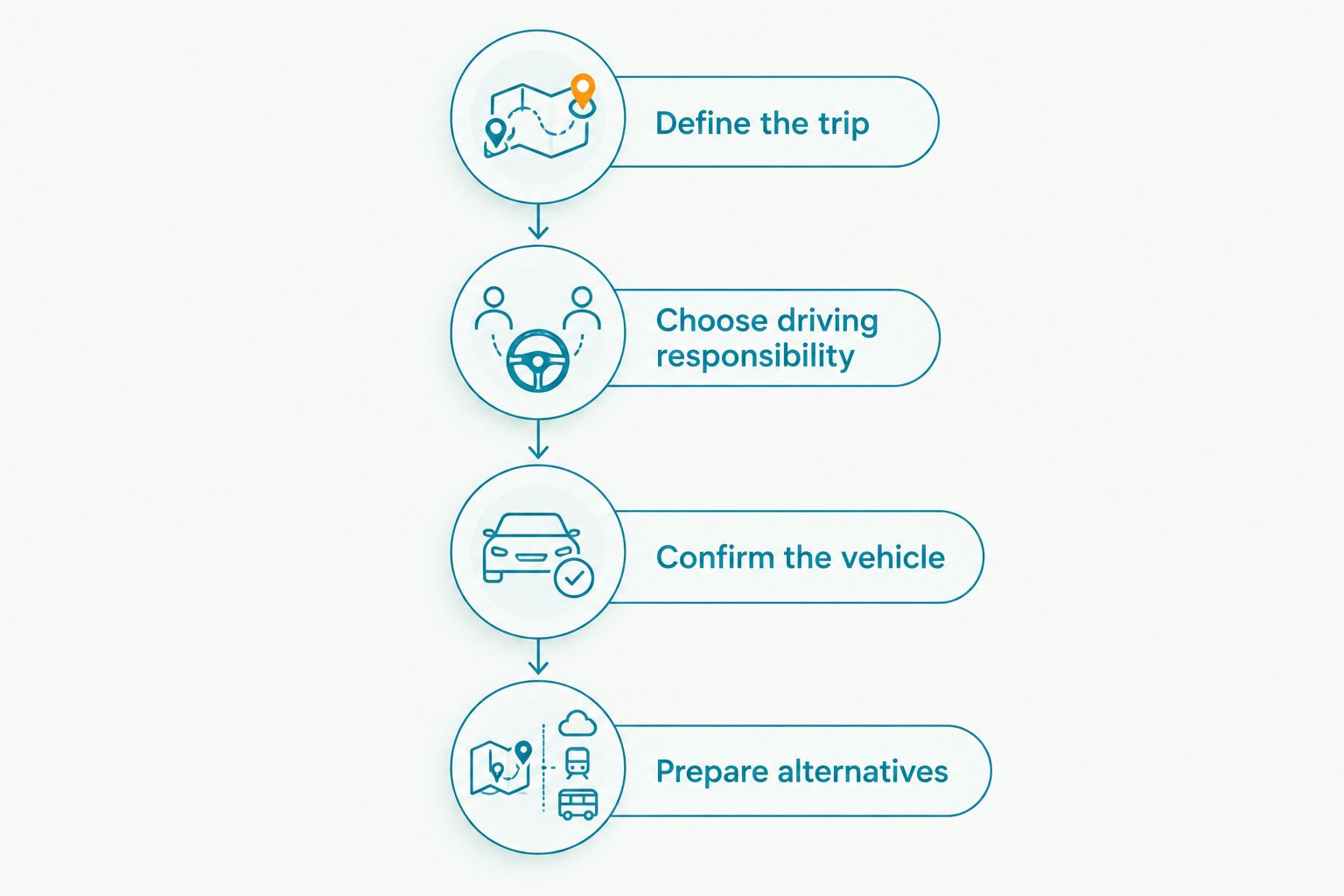
Turn the shortlist into a safer booking plan
Define the trip
Prepare 1 written itinerary covering pickup, destinations, stops and the expected return. Include your passenger count and luggage description so the quotation addresses the journey rather than just a vehicle category.
For provincial travel, identify the final access road as well as the destination. A hotel entrance, worksite approach or hillside property can create different vehicle requirements without making every road in that province difficult.
Choose driving responsibility
Self-drive suits you when you are comfortable with the vehicle, route and local conditions. With-driver rental removes the driving task from your schedule, but the itinerary still needs room for weather-related changes.
VPI Cars offers both arrangements, along with corporate and long-term rentals. For recurring work journeys, explain the schedule and destinations instead of treating each trip as an unrelated booking.
Confirm the vehicle
Ask for the exact model and variant, then clarify seating, luggage fit and relevant safety equipment. Ask how the rental agreement treats weather disruption, route changes and vehicle damage; do not assume a particular protection applies.
Request written clarification where a term affects your decision. A clear quotation is more useful than comparing headline vehicle descriptions that cover different journey requirements.
Prepare alternatives
Identify 2 route options before leaving, and check current official weather and road advisories on the travel day. Neither a navigation app nor a vehicle badge establishes that a flooded street is passable.
For your 2026 booking, send these details through Contact Us and request a quotation for the complete itinerary. Ask VPI Cars to confirm the proposed vehicle and trip arrangements rather than assuming a particular model will be assigned.
What to check before driving away
Give yourself time to inspect the vehicle while parked. Finding an unfamiliar control in a dry pickup area is easier than finding it when traffic slows in heavy rain.
- Check visibility: Operate the wipers and washers, inspect the glass and learn the demisting controls.
- Check tyres: Look for visible damage and ask for any concern to be addressed before departure.
- Check lighting: Locate the dipped headlights and confirm the relevant lights work.
- Secure the cabin: Fasten seat belts, secure bags and keep the driver's footwell clear.
- Review the handover: Record existing damage through the agreed process and clarify whom to contact if conditions disrupt the journey.
On the road, reduce speed as conditions worsen and increase your following distance. Avoid abrupt steering or braking, and stop somewhere safe if visibility becomes inadequate. No appointment justifies entering floodwater of unknown depth.
Which rainy-season SUV should you choose?
Start with the Toyota Corolla Cross for everyday Manila use. Move to the Honda CR-V when family fit is the deciding factor, compare the Toyota Fortuner for a provincial itinerary, or investigate the Subaru Forester when all-wheel drive is a specific requirement.
For car rental, choose the service arrangement as carefully as the model. VPI Cars can address self-drive, with-driver and corporate rental enquiries for Metro Manila and Luzon; provide the itinerary so the quotation answers your actual transport needs.
FAQ
What’s the best SUV for rainy season driving in Manila?
The Toyota Corolla Cross is the city-first shortlist pick for everyday Manila journeys. Choose the exact vehicle around tyre condition, visibility, safety equipment and passenger needs rather than the SUV badge alone.
Is a Toyota Fortuner safer than a crossover in floodwater?
A Toyota Fortuner should not be treated as safe for floodwater of unknown depth. Vehicle height and construction do not establish the road surface, current or hidden hazards underneath the water.
Do I need all-wheel drive for rainy Metro Manila roads?
All-wheel drive is not a substitute for sound tyres, reduced speed and adequate stopping space. Evaluate it as a specific traction requirement rather than an automatic requirement for every rainy city journey.
Should I choose the Honda CR-V or Toyota Corolla Cross for a family trip?
Shortlist the Honda CR-V when family seating and luggage fit are the main considerations, and the Toyota Corolla Cross for city-first use. Confirm the actual variant and check the cabin with your intended seating arrangement.
Can I request an SUV rental for an out-of-town Luzon trip?
VPI Cars serves Metro Manila and Luzon, including out-of-town and provincial journeys. Send the destination, dates, passenger count and luggage requirements for an itinerary-specific quotation and vehicle confirmation.
Is a with-driver rental better during the rainy season?
A with-driver rental suits travellers who prefer not to handle driving while managing appointments or an unfamiliar route. It does not eliminate weather disruption, so allow for route changes and follow current road advisories.
What should I ask before confirming a rainy-season SUV rental?
Ask about the exact vehicle, variant, passenger and luggage fit, agreement terms and arrangements for weather-related disruption. Confirm the journey details in writing rather than assuming every SUV rental includes the same equipment or conditions.
One last thing
Before your first rainy journey in 2026, practise clearing the windscreen while the vehicle is parked. Locate the demister, select the correct airflow and learn the wiper settings. A familiar control layout is immediately useful; extra vehicle height cannot clear your view.
Related guides
- Best compact cars for Metro Manila traffic and parking
- Planning a Luzon road trip before booking self-drive
- Best SUVs for Philippine road trips