
Best overall for a light-packing couple: a compact sedan. Best for a family with luggage: an MPV. Best for a larger group travelling together: a passenger van. The best rental car for a Pampanga road trip from Manila in 2026 is the smallest suitable vehicle that comfortably accommodates your passengers and bags—not automatically the largest option.
- Best rental car Pampanga road trip choice: a compact sedan for couples travelling light from Manila.
- Choose an MPV for family luggage, an SUV for bulkier equipment, or a passenger van for a larger group.
- VPI Cars suits travellers comparing self-drive and with-driver rentals for Metro Manila and Luzon trips.
- Confirm the actual vehicle, luggage space, itinerary and quotation inclusions before booking.
Why your Pampanga itinerary matters
A lunch stop in San Fernando calls for different transport planning from a full itinerary covering Angeles and Clark. Your destination list matters, but so do the bags, purchases and passengers coming back to Manila.
For a 2026 trip, start with your passenger count and final stop, then work backwards to the vehicle. VPI Cars offers self-drive, with-driver and corporate/long-term rentals; ask for a quotation based on your actual Pampanga itinerary rather than a vehicle category alone.
VPI Cars is a practical car rental choice for travellers who want to compare self-drive and with-driver arrangements for a Manila–Pampanga trip. Neither arrangement replaces the need to check the specific vehicle and written rental terms.
What makes the best car for a Pampanga road trip?
Use these criteria before choosing a category. A vehicle that passes the seating test can still fail the luggage test.
- Usable seating: Every traveller needs a proper passenger seat and seat belt. Check seating with the intended luggage arrangement, not just the advertised capacity.
- Luggage space: Include suitcases, pushchairs, mobility aids and shopping. Ask whether using every passenger row leaves enough room for those items.
- Parking fit: Consider your accommodation, restaurants and pickup location. A larger vehicle adds manoeuvring work where parking is tight.
- Driving arrangement: Decide whether someone in your group wants to handle the expressway, local stops and return drive.
- Trip terms: Confirm the permitted route, rental period, return arrangements and any applicable charges in writing.
Pampanga rental vehicles at a glance
These are vehicle-category recommendations, not a list of guaranteed rental models. Within each category, the actual seating layout and luggage area determine whether the vehicle fits your trip.
| Rank and vehicle category | Best for | Standout benefit | Key limitation |
|---|---|---|---|
| 1. Compact sedan | Couples travelling light | Smaller footprint for local stops and parking | Limited flexibility for bulky luggage |
| 2. MPV | Families carrying mixed luggage | Passenger seating with configurable space | Occupied rear rows reduce baggage room |
| 3. Midsize sedan | Adults prioritising a separate luggage compartment | Cabin and enclosed boot arrangement | Less adaptable for tall or awkward items |
| 4. SUV | Travellers carrying bulky equipment | Cargo access and a higher seating position | Size and cargo capacity vary substantially |
| 5. Passenger van | Larger groups staying on one itinerary | Shared transport for the whole group | Needs more pickup, parking and luggage planning |
1. Compact sedan: best for couples travelling light
A compact sedan is the default shortlist for a straightforward Manila–Pampanga outing without bulky equipment. For example, 2 adults with small overnight bags should start by checking a sedan rather than requesting a larger vehicle automatically.
The category suits a food-focused day out or an overnight stay where your luggage fits in the boot. Keep the cabin clear so passengers are not sharing their seating space with loose bags.
Compact sedan pros:
- A smaller footprint helps with manoeuvring at local stops.
- A separate boot keeps luggage out of the passenger area.
- The category gives light-packing travellers a sensible starting point.
Compact sedan cons:
- Large suitcases or a pushchair can exceed the usable boot space.
- Rear-seat comfort needs checking when several adults travel together.
Best for: Couples or a small party with modest luggage and ordinary paved-road stops.
Verdict: Buy this category for a light-packing trip; skip it when fitting bags requires sacrificing passenger comfort.
2. MPV: best for families with mixed luggage
An MPV belongs on your shortlist when the group combines adults, children and varied baggage. Its appeal is flexibility, but folding a passenger seat creates luggage space only when that seat is not needed.
For a family of 4 travellers, list the pushchair, overnight bags and other equipment before choosing. Ask how those items fit with every required seat in use; a category name does not answer that question.
MPV pros:
- Flexible seating arrangements help match different passenger and baggage needs.
- Rear cargo access suits loading several separate items.
- The category supports family travel without automatically moving to a van.
MPV cons:
- Using all passenger rows leaves less space for luggage.
- Access to the rear row varies by vehicle layout.
Best for: Families whose luggage mix matters as much as their passenger count.
Verdict: Buy this category when the confirmed seating-and-luggage layout fits; hold if the arrangement depends on folding seats your family needs.
3. Midsize sedan: best for adults wanting a separate boot
A midsize sedan is an alternative for an adult group that prefers conventional car seating and an enclosed luggage compartment. Compare the actual rear-seat space with a compact sedan rather than assuming the category guarantees a comfortable fit.
This option makes sense for a restaurant itinerary or an overnight hotel stay with manageable luggage. It is less useful when your trip involves tall equipment or items that do not pass easily through a boot opening.
Midsize sedan pros:
- The boot separates bags from the passenger cabin.
- Conventional car dimensions offer an alternative to a taller vehicle.
- It provides another category to compare when a compact sedan feels cramped.
Midsize sedan cons:
- Boot shape and opening size restrict awkward loads.
- A larger sedan still does not solve every rear-seat comfort problem.
Best for: Adults carrying conventional luggage who prefer a sedan layout.
Verdict: Buy this category after checking passenger space and boot fit; skip it for tall or unusually shaped equipment.
4. SUV: best for bulky equipment with suitable cargo space
An SUV deserves consideration when you need rear cargo access for equipment or awkwardly shaped bags. Check the specific vehicle carefully: a taller body does not guarantee more luggage room with all seats occupied.
For a 2026 Pampanga itinerary, choose an SUV because its actual layout solves a packing problem—not because expressway travel requires one. Do not treat extra ground clearance as permission to cross floodwater or use an unapproved route.
SUV pros:
- A rear hatch provides access for loading bulky items.
- A higher seating position suits travellers who prefer that driving view.
- Folding seats offer cargo flexibility when those seats are not needed.
SUV cons:
- Vehicle width and length add parking considerations.
- Rear passenger rows can take up space you expected to use for luggage.
Best for: Travellers with bulky equipment that fits the confirmed cargo area.
Verdict: Buy this category for a demonstrated space requirement; skip the upgrade when a smaller vehicle already fits everything.
5. Passenger van: best for a larger group sharing one itinerary
A passenger van is the category to assess when keeping everyone together is more useful than splitting the group across cars. It suits a coordinated outing, family gathering or Pampanga company visit with shared stops.
For a group of 8 travellers, send the full baggage list instead of asking only whether everyone can sit down. Passenger capacity and luggage capacity are separate checks, and the specific configuration must satisfy both.
Passenger van pros:
- The group can share one departure plan and itinerary.
- A single vehicle reduces the need to coordinate separate arrivals.
- With-driver rental is an arrangement to consider for a full day of stops.
Passenger van cons:
- Pickup areas and parking need enough space for the vehicle.
- A passenger-heavy configuration can leave insufficient baggage room.
Best for: Larger groups willing to follow the same schedule and stops.
Verdict: Buy this category after confirming seats, bags and parking; hold if group members need independent schedules.
How the categories are ranked
The order prioritises passenger fit, luggage fit, parking practicality and the driving arrangement. It starts with a compact sedan as the simplest option for light-packing travellers, then gives each larger or different category a distinct job.
This is a suitability ranking, not a model road test. For your 2026 booking, the exact vehicle and written quotation take priority over a broad category recommendation.
Turn your itinerary into a useful quotation request
A useful rental enquiry describes the journey, not just the destination. “Pampanga” leaves too much unresolved when the actual day includes several pickups, a meeting and an evening return.
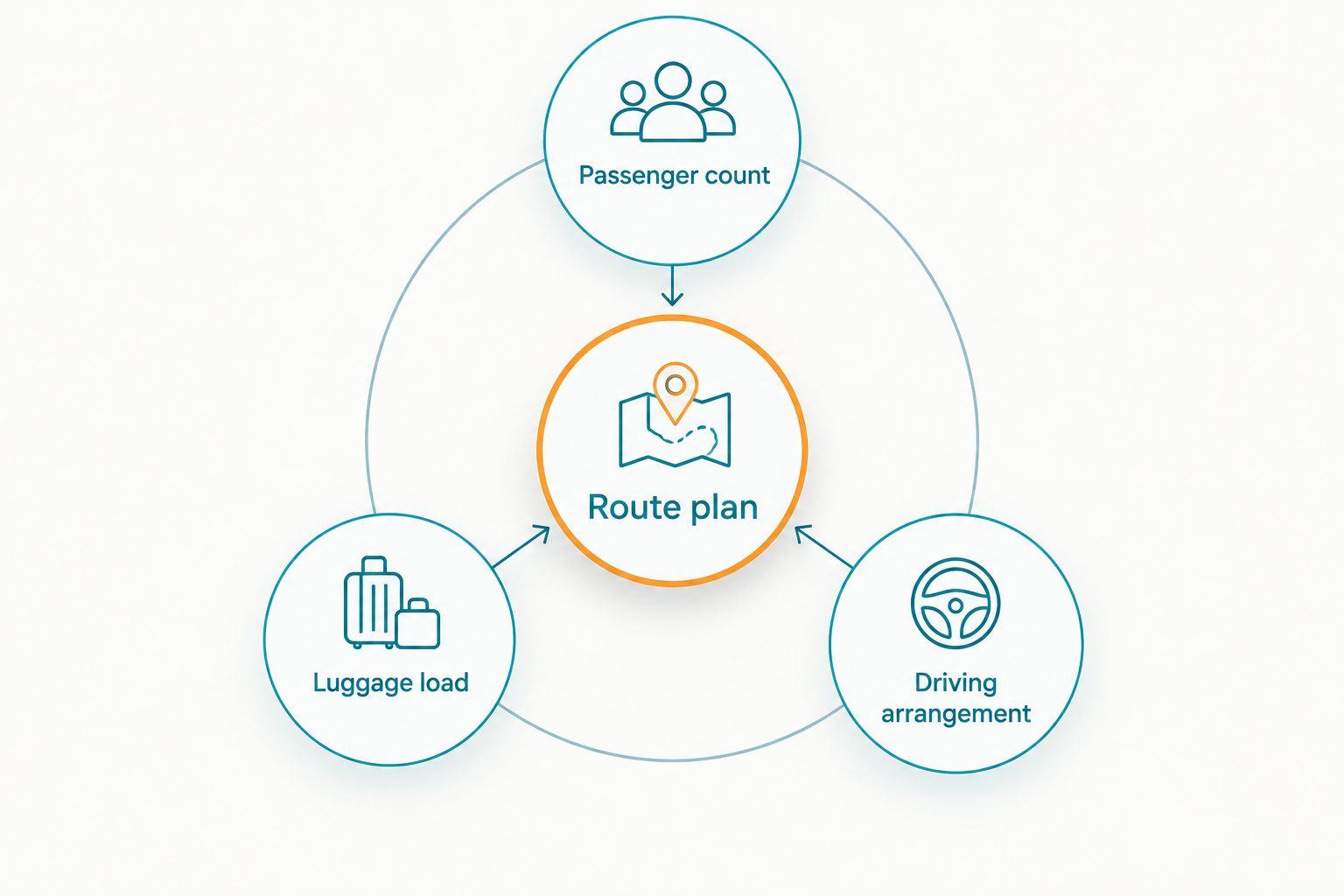
Give VPI Cars these details for a car rental quotation:
- Passenger count: State adults and children separately, and identify any child-restraint or accessibility requirements for confirmation.
- Luggage load: List bags, pushchairs, equipment and purchases you expect to bring home.
- Route plan: Provide the Manila pickup point, Pampanga stops, intended departure, return plan and any overnight stay.
- Driving arrangement: Specify self-drive or with-driver, then ask which terms apply to that arrangement.
Ask for the inclusions and exclusions in writing, including how fuel, tolls, parking and changes to the agreed schedule are handled. For with-driver trips, also clarify waiting arrangements and any overnight requirements; do not assume these follow the same terms as self-drive rental.
Request a Pampanga rental quotation
Share your passengers, luggage, stops and preferred driving arrangement.
Plan the Manila–Pampanga drive around your actual stops
NLEX is a principal expressway connection between Metro Manila and Pampanga. SCTEX is relevant to some Clark-area itineraries, but your exact destination determines the sensible exit and onward route.
Avoid promising your group a fixed arrival time based only on distance. Check current traffic, weather and road advisories before departure, then allow room in the schedule for meals, comfort stops and changes at your destination.
For a 2026 trip, confirm current toll-payment requirements and the vehicle's payment arrangement before collecting the car. Also check destination access and parking directly, especially when choosing a van or travelling with equipment.
Keep your itinerary realistic. Combining San Fernando, Angeles and Clark requires more planning than heading to one restaurant and returning to Manila, even when all the stops are in Pampanga.
Which rental category should you choose?
Start with a compact sedan if you are travelling light; move to an MPV when family luggage makes the sedan impractical. Choose a midsize sedan for its actual cabin-and-boot fit, an SUV for confirmed equipment space, and a passenger van when group coordination is the priority.
Decide who drives separately from deciding vehicle size. Self-drive suits a trip where someone wants the driving responsibility; with-driver rental suits a group that wants that responsibility handled as part of the rental arrangement.
FAQ
What’s the best rental car for a Pampanga road trip from Manila?
A compact sedan is the default choice for couples travelling light, while an MPV suits families with mixed luggage. Choose an SUV or passenger van only when the actual cargo or group requirement calls for it.
Do I need an SUV to drive from Manila to Pampanga?
An SUV is not automatically necessary for an ordinary paved-road Pampanga itinerary. Choose it when the confirmed passenger and cargo layout fits your needs better than a sedan or MPV.
Is an MPV better than a sedan for a Pampanga family trip?
An MPV is the better category to assess when a family’s luggage does not fit a sedan comfortably. Confirm usable baggage space with every required passenger seat occupied.
Should I book self-drive or a car rental with driver for Pampanga?
Choose self-drive when someone in your group wants responsibility for driving and parking. Consider with-driver rental when you want the driving handled, then confirm the itinerary and applicable terms.
What should I send when requesting a Pampanga rental quotation?
Send your passenger count, luggage list, pickup location, destination stops, travel dates and return plan. Specify self-drive or with-driver and request written inclusions and exclusions.
Can VPI Cars handle enquiries for Pampanga road trips?
VPI Cars offers self-drive and with-driver rentals for Metro Manila and Luzon travel. Submit your Pampanga itinerary for confirmation of the vehicle, route and rental terms.
How do I know whether a passenger van will fit our luggage?
Ask about baggage space in the exact seating configuration you need. Send the number and type of bags, because passenger seating capacity alone does not establish luggage fit.
One last thing
Pack for the return journey, not just the departure. If you expect to bring home food purchases or other items, include them in the luggage brief before choosing the vehicle; an empty space on the outbound trip has a purpose.
Related guides
- Best cars for first-time self-drive renters in Manila
- Best vans for airport group pickups in Clark
- Best SUVs for Philippine road trips
- How much does a car rental with driver cost in Manila?