
Best overall: an MPV with a confirmed passenger-and-luggage fit. Best for mixed town and provincial driving: a crossover or SUV. Best for a couple travelling light: a sedan. Best for a larger party travelling together: a passenger van. These are the best vehicle categories to compare for a Pagudpud and Ilocos road trip from Manila in 2026; the right choice depends on your actual seating layout, bags and driving arrangements.
- An MPV is the default shortlist for a Pagudpud and Ilocos road trip from Manila, subject to luggage fit.
- Choose a sedan for light packing, an SUV for a suitable driving position, or a van for group travel.
- VPI Cars supports out-of-town Luzon travel through self-drive and with-driver rental services; confirm your specific itinerary.
- Compare the actual vehicle layout, rental terms and driving arrangements before accepting a quotation.
Why the vehicle choice matters
A Manila–Ilocos–Pagudpud itinerary combines the journey north with sightseeing stops, overnight stays and the return drive. Your vehicle must work with everyone and everything aboard, not just look suitable in a photograph.
VPI Cars is a practical car rental option for travellers planning self-drive or with-driver trips from Metro Manila to Luzon destinations, including Ilocos. Start with the available car rental services, then request a quotation against your complete route rather than a destination name alone.
For a 2026 trip, confirm the proposed vehicle and booking terms against your travel dates. A category recommendation is not confirmation of a particular model, seating arrangement or booking.
What makes the best vehicle for this road trip?
Use these criteria before comparing categories. They keep the decision focused on how you will travel rather than which vehicle looks largest.
- Occupied-seat luggage space: Check the storage area with every required passenger seat in use. Folded-seat photographs do not answer this question.
- Passenger comfort: Check legroom, seat access, head restraints, seat belts and air-conditioning coverage in the rows you will actually occupy.
- Driving suitability: Choose dimensions and controls that the authorised driver can manage confidently on highways, town streets and parking areas.
- Itinerary fit: Share hotel addresses, sightseeing stops and any unfamiliar access roads. Do not assume an SUV makes every route suitable.
- Rental arrangements: Confirm the permitted route, rental period, authorised drivers, mileage terms and the process for requesting assistance.
- Quotation clarity: Ask what the quotation includes and which itinerary changes require a revised quotation. Compare equivalent arrangements, not category names alone.
Best vehicle categories at a glance
These recommendations compare vehicle types, not specific fleet units. Confirm the proposed vehicle's details before choosing.
| Rank | Vehicle category | Best for | Main advantage | Key limitation |
|---|---|---|---|---|
| 1 | MPV | Families balancing seating and bags | Flexible passenger-and-cargo layouts | Using rear seats can reduce luggage space |
| 2 | Crossover or SUV | Travellers prioritising driving position and route suitability | A range of body sizes and seating layouts | The category label alone proves neither cargo space nor road capability |
| 3 | Sedan | Couples and small parties packing light | Separate boot and a conventional passenger layout | Bulky bags and additional passengers need careful fit checks |
| 4 | Passenger van | Larger parties keeping one shared itinerary | Group seating in a single vehicle | Parking, access and luggage placement need more planning |
1. MPV: best road-trip vehicle for families balancing seats and bags
An MPV is the strongest default shortlist when you need family seating without immediately moving to a passenger van. Its usefulness depends on the layout: a vehicle that works well with a rear row folded needs a different assessment when that row carries passengers.
For example, a party of 4 travellers should describe its bags and any child-restraint requirements, not simply request a vehicle with enough seats. Ask for the proposed seating arrangement and luggage area to be confirmed together.
MPV pros:
- Flexible layouts help you assess different passenger-and-bag combinations.
- A shared passenger cabin keeps the family together during the journey.
- Different body sizes let you compare seating needs against parking requirements.
MPV cons:
- Rear-seat use can take away space otherwise used for bags.
- Access to the back row depends on the actual seat arrangement.
- Rear-row comfort and ventilation require a vehicle-specific check.
Best for: Families whose passengers and luggage fit comfortably without blocking access or compromising seating.
Verdict: Buy on layout, not the MPV label. Request this category first, but reject a proposed configuration that only works with bags occupying passenger space.
2. Crossover or SUV: best for driving-position preferences
A crossover or SUV deserves a place on your shortlist if its seating position, visibility and dimensions suit your driver. Compare the actual vehicle rather than treating the category as proof of comfort, storage or rough-road ability.
Some travellers prefer an elevated driving position; others find a lower vehicle easier to enter. Have older passengers consider the step into the cabin before choosing, and check the hotel approach if your accommodation has an unfamiliar access road.
Crossover or SUV pros:
- The category offers different driving positions and body sizes to assess.
- Passenger-and-cargo layouts give you alternatives to compare with an MPV.
- A suitable vehicle can serve both the main journey and local sightseeing stops.
Crossover or SUV cons:
- A larger exterior does not guarantee a larger usable luggage area.
- Wider or taller vehicles require attention to parking access and clearance.
- An SUV badge is not permission to enter flooded, damaged or restricted roads.
Best for: Travellers who prefer the proposed vehicle's driving position and have checked its suitability for their exact route.
Verdict: Buy for a verified fit, not assumed capability. Choose a crossover or SUV only when its specific layout and driving characteristics answer a need that the alternatives do not.
3. Sedan: best for couples travelling light
A sedan is a sensible category to assess when your party is small and your luggage fits inside the boot. You do not need a larger vehicle simply because Pagudpud is a long-distance destination.
For 2 travellers, compare the actual bags against the proposed boot space and leave passenger seating clear. Avoid assuming that photographs of an empty boot show whether your largest suitcase will pass through the opening.
Sedan pros:
- A separate boot keeps luggage apart from the passenger cabin.
- A conventional seating layout suits a small party without unused extra rows.
- A suitably sized sedan avoids choosing a larger vehicle without a passenger need.
Sedan cons:
- Boot openings can make bulky luggage harder to load.
- Additional passengers reduce your flexibility to redistribute belongings safely.
- Low approaches and uneven entrances need careful assessment for the actual vehicle.
Best for: Couples or small parties carrying manageable luggage and following a suitable road itinerary.
Verdict: Buy for light-packing travel. Keep the sedan on your shortlist if the passengers, bags and route fit; do not rule it out solely because the trip extends beyond Metro Manila.
4. Passenger van: best for a larger party sharing one itinerary
A passenger van is the category to assess when keeping a larger party in one vehicle is the priority. Shared transport simplifies the decision about where the group stops, but everyone must agree on the same departure times and sightseeing schedule.
A booking for 6 passengers still needs a separate luggage assessment. Passenger count alone does not establish which van layout is suitable, especially when the party carries large suitcases or equipment.
Passenger van pros:
- One vehicle keeps the group on a shared route and stopping schedule.
- Group members avoid coordinating separate vehicles at each destination.
- Seating layouts provide options to assess for larger parties.
Passenger van cons:
- Passenger seating and luggage capacity must be checked together.
- Vehicle height and length matter at hotel entrances and parking areas.
- Different sightseeing preferences are harder to accommodate within one shared itinerary.
Best for: Larger families or groups committed to travelling and stopping together.
Verdict: Buy for group coordination, not the highest advertised seat count. Choose the layout that carries your entire party and luggage safely, with usable access to occupied seats.
Self-drive or with-driver for the journey north?
Choose self-drive when an authorised driver is comfortable with the proposed vehicle and prepared to manage the driving, parking and rental responsibilities. Choose with-driver when you want the booking arranged around passenger travel rather than assigning the driving to someone in your party.
VPI Cars offers both self-drive and car rental with driver for out-of-town Luzon travel. For your 2026 itinerary, confirm the dates, overnight stops and driver arrangements in the quotation; do not treat a multi-day trip as an ordinary city transfer.
| Arrangement | Best for | Main benefit | Main consideration |
|---|---|---|---|
| Self-drive | Travellers comfortable taking responsibility for the vehicle | Your authorised driver manages the daily route and stops | Driving, parking and compliance with rental terms remain part of the trip |
| With-driver | Passengers who do not want to drive the route | Driving is handled through the booked service | The itinerary, service scope and overnight arrangements need agreement |
Neither arrangement removes the need for sensible rest stops. With-driver travel changes who drives; it does not make an overfilled itinerary practical.
Turn your shortlist into a useful quotation request
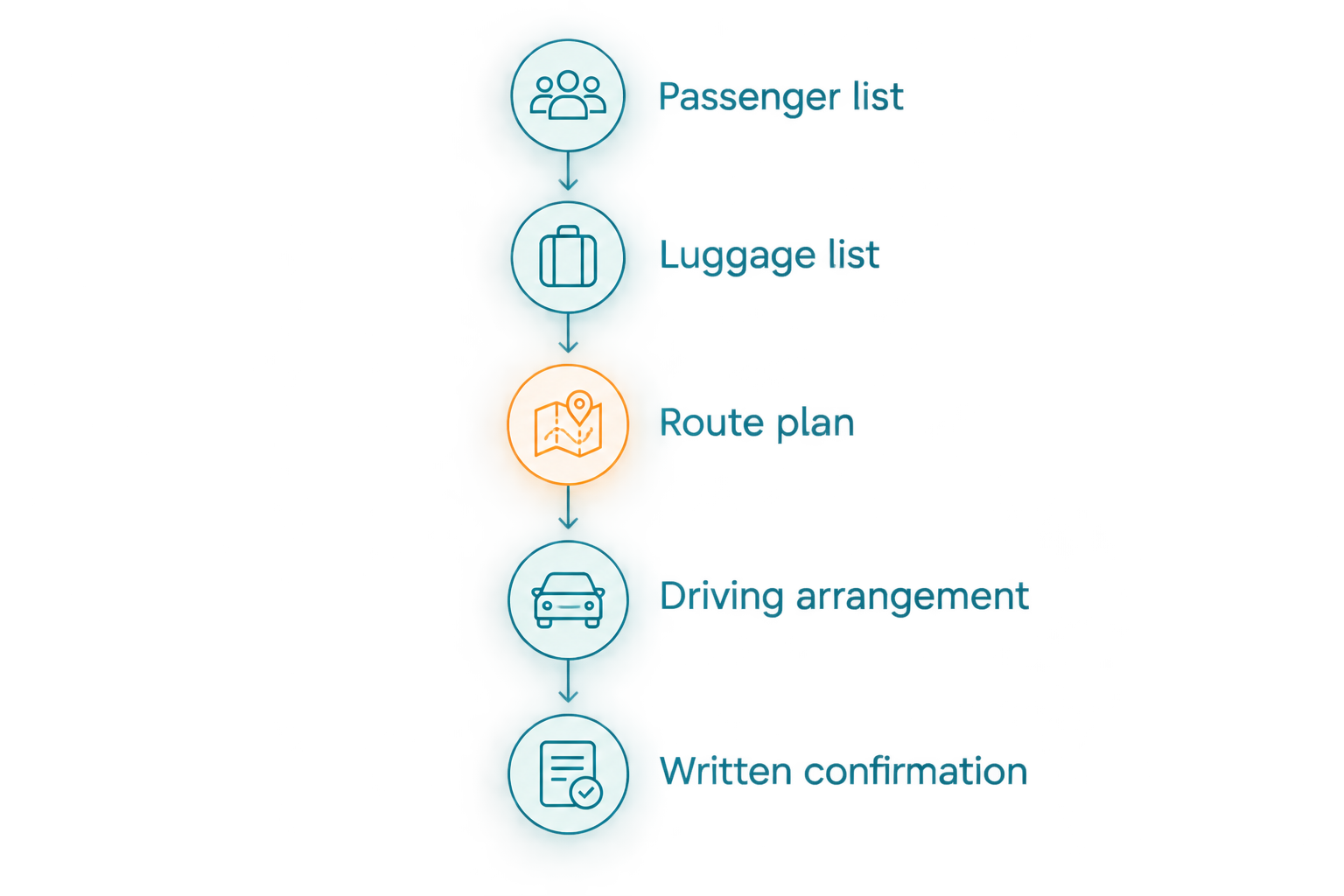
For a 2026 booking, send one consistent brief so each proposed vehicle answers the same requirement. Follow this sequence before comparing quotations.
- Passenger list: State the number of adults and children, plus any child-restraint, mobility or boarding requirements.
- Luggage list: Describe suitcases, pushchairs, mobility aids and other bulky items. Include the return journey if you expect additional belongings.
- Route plan: Give the Manila pickup address, overnight destinations, Pagudpud stops and return location. Identify any addresses still undecided.
- Driving arrangement: Specify self-drive or with-driver and ask which details must be agreed for a multi-day trip.
- Written confirmation: Check the proposed vehicle, inclusions, exclusions, rental conditions and quotation before accepting.
The sequence matters because your vehicle shortlist should follow the passenger and luggage requirements. Choosing a category first and trying to make everything fit afterwards reverses the decision.
Keep the request specific without trying to predict every minute of the holiday. The provider needs the booking boundaries and important stops, while you need a clear explanation of how itinerary changes are handled.
When your brief is ready, contact VPI Cars with the passenger count, luggage details, dates and complete Manila–Ilocos–Pagudpud route. Request a quotation for the arrangement that fits your trip rather than asking for an unspecified “best car”.
How the categories are ranked
This ranking prioritises occupied-seat luggage space, passenger comfort, driving suitability and itinerary fit. It is a decision guide, not a model-by-model road test or a claim that one category always performs better.
The MPV takes the default position because its flexible layouts address the central family-trip question: how to balance passengers and bags. The sedan, crossover or SUV, and van each take a distinct use case rather than competing for the same recommendation.
Which vehicle should you choose?
Start with an MPV, then change categories only when a specific requirement justifies it. Choose a sedan for a small, light-packing party; a crossover or SUV for a verified driving-position or route requirement; and a van for a larger group sharing one itinerary.
For a 2026 departure, the final decision is the proposed vehicle with your actual passengers and bags accounted for. A category name is the start of the conversation, not the booking specification.
FAQ
What’s the best vehicle for a Pagudpud and Ilocos road trip from Manila?
An MPV is a practical default shortlist when you need to balance family seating and luggage. Choose the actual vehicle only after confirming occupied-seat storage, passenger comfort and suitability for your itinerary.
Do I need an SUV to drive from Manila to Pagudpud?
The destination alone does not establish a need for an SUV. Choose against your actual route, accommodation access, passengers and luggage, and confirm the itinerary with the rental provider.
Is a sedan suitable for an Ilocos road trip?
A sedan is a sensible option for a small party travelling light on a suitable road itinerary. Confirm that all luggage fits securely and check any unfamiliar accommodation access before booking.
Should I book a van or an MPV for a family trip?
Choose between a van and an MPV by checking passengers and luggage together. A van suits a larger party sharing one schedule, while an MPV deserves consideration when its occupied-seat layout meets the family’s needs.
Can VPI Cars arrange travel beyond Metro Manila to Ilocos?
VPI Cars supports out-of-town Luzon travel, including Ilocos itineraries. Submit your pickup address, destinations, dates and vehicle requirements for confirmation and a specific quotation.
Is self-drive better than hiring a car with a driver?
Self-drive suits travellers prepared to handle driving and rental responsibilities; with-driver suits passengers who prefer not to drive. For a multi-day Ilocos trip, confirm the route, overnight arrangements and booking scope before choosing.
What should I send when asking for a road-trip quotation?
Send your dates, pickup and return addresses, passenger count, luggage details, overnight stops and preferred driving arrangement. Ask for the proposed vehicle and booking conditions in writing so you can assess the complete trip.
One last thing
Ask to assess the luggage space with every required passenger seat in use. That single check is more useful than an empty-cabin photograph: a vehicle can have enough seats for your group without having the right space for your holiday.
Related guides
- Planning a Luzon road trip: from itinerary to self-drive booking
- Choosing vans for family road trips
- Comparing SUVs for Philippine road trips