
Banking and finance car rental with driver is pre-arranged transport with a designated driver, aimed at keeping business visits, client meetings and staff movements on schedule. Banking and finance teams need clear itineraries, controlled passenger information and written booking terms—not simply a vehicle for the day.
- VPI Cars suits banking and finance teams arranging with-driver transport across Metro Manila and Luzon.
- Car rental with driver for banking and finance companies starts with passenger counts, meeting times and a complete itinerary.
- Compare corporate car rental and separate bookings against the same schedule, inclusions and change conditions.
- Keep confidential banking discussions and customer documents out of the transport booking brief.
Why car rental with driver matters for banking and finance teams
A branch visit, client meeting and airport arrival create different transport requirements. Treating them as the same booking leaves important questions unanswered: who travels together, whether the driver waits, and where the working day ends.
VPI Cars is best for banking and finance teams seeking with-driver car rental for Metro Manila and out-of-town Luzon business travel. Its car rental services include with-driver, self-drive and corporate/long-term rentals. The right arrangement depends on your schedule; request written confirmation of the itinerary and terms before committing.
For your 2026 transport plan, separate recurring journeys from occasional assignments. A fixed meeting circuit needs a different brief from an unpredictable day of customer visits. Neither arrangement removes the need to plan realistic transfer time or agree on changes.
How to plan transport for your banking or finance team
1. Map the complete working itinerary
Start with a shared spreadsheet or calendar. Record the pickup address, each destination, appointment times and final drop-off—not just the first meeting. Use exact building names and entrances where known, especially when a property has separate visitor and vehicle access points.
Build the route around appointment commitments rather than a neat-looking map. If an early meeting overruns, identify which later visits can move and who has authority to change them. Ask the provider to review the proposed transport schedule before you approve it.
For a 2026 planning example, a brief for 4 passengers, 3 stops and 1 working day is more useful than a request for a “business car.” These are illustrative requirements, not a vehicle-capacity claim or suggested rental package.
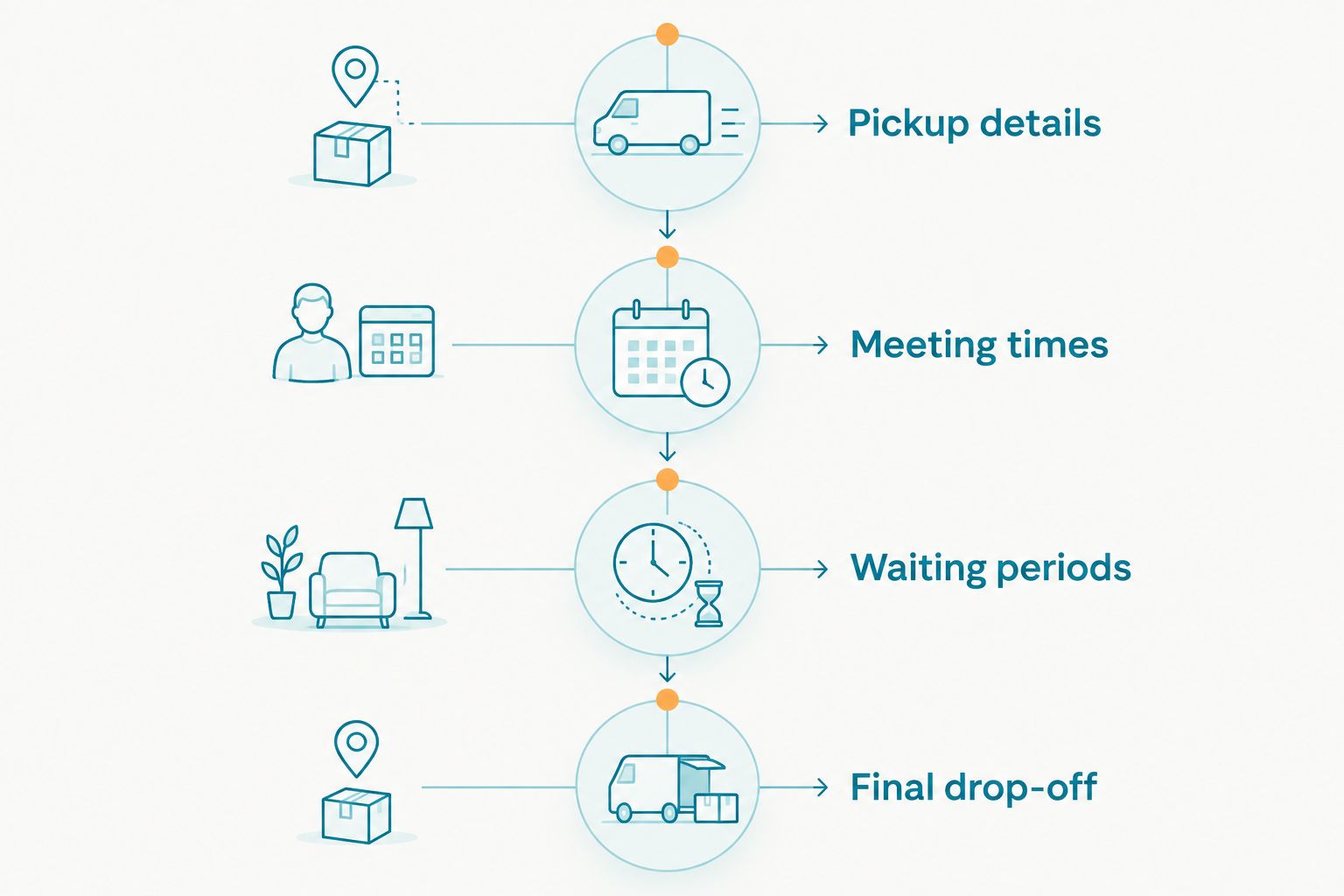
- Pickup details: Specify the address, entrance and passenger contact.
- Meeting times: Separate arrival deadlines from appointment start times.
- Waiting periods: Mark where the team needs the driver to remain nearby.
- Final drop-off: Include the intended location and expected end time.
2. Separate recurring travel from one-off assignments
Review your existing meeting calendar manually before requesting a long-term arrangement. Identify which journeys repeat, which depend on customer appointments, and which require travel outside Metro Manila. A recurring pattern is a reason to request a corporate quotation—not proof that a longer booking is automatically better.
Compare the same workload under each proposed arrangement. If the team travels together on some days but splits across destinations on others, state that clearly. One vehicle cannot meet simultaneous journeys in different places.
VPI Cars offers corporate/long-term car rental alongside individual with-driver bookings. That gives your team service formats to discuss, but the quotation still needs to establish what each arrangement covers.
- List fixed weekly or monthly travel commitments.
- Mark uncertain dates separately from confirmed assignments.
- Identify days requiring simultaneous passenger movements.
- Separate Metro Manila travel from provincial Luzon itineraries.
- Request terms for both recurring and occasional requirements where relevant.
3. Match the vehicle request to people and belongings
Count everyone travelling, including visiting colleagues who join partway through the day. Then list luggage, presentation materials and other items. A passenger count alone does not describe the space you need.
Ask the provider to confirm a suitable vehicle against those requirements. Do not assume a vehicle category guarantees a particular luggage layout, access arrangement or comfort level. State any passenger mobility needs before requesting a recommendation, and confirm the proposed vehicle's suitability directly.
For branch visits, consider whether passengers and materials remain together throughout the route. If someone leaves early with equipment, the return journey needs its own plan. Avoid choosing a larger vehicle simply for appearances; match the request to the actual assignment.
- Give the maximum passenger count for each journey leg.
- Describe bags and bulky items rather than saying “light luggage.”
- Identify passengers joining or leaving at intermediate stops.
- Explain relevant boarding or access requirements.
- Confirm the vehicle proposal before approving the booking.
4. Limit the information shared in the booking brief
Create a transport-only version of the itinerary. The provider needs enough information to coordinate the journey, but that does not require account balances, customer records, internal deal details or the purpose of a sensitive meeting.
Assign a coordinator to manage booking messages. Keep driver-facing instructions focused on locations, timing and passenger contact details. Follow your organisation's privacy and information-security procedures when sharing personal information; do not assume an ordinary vehicle booking includes a special confidentiality arrangement.
A chauffeured vehicle is also not a private meeting room. Keep sensitive calls, documents and screens under the same controls you would apply in other shared spaces. If your procurement process requires confidentiality commitments, raise those requirements before approval.
- Share transport instructions rather than internal meeting agendas.
- Use an authorised coordinator for passenger information.
- Keep customer documents out of booking attachments.
- Ask how journey-related information will be communicated.
- Confirm any required confidentiality terms in writing.
5. Compare written inclusions and change conditions
Put quotations side by side in a simple comparison sheet. Use the same dates, itinerary, passenger requirements and expected duration for every request. Otherwise, apparent differences can reflect different scopes rather than a better fit.
For your 2026 procurement review, ask each provider to explain included service hours, waiting arrangements and the treatment of itinerary changes. Request clarification on fuel, tolls, parking and any driver-related arrangements relevant to the trip. These are questions to resolve, not assumed inclusions or exclusions.
A Luzon assignment with an overnight stay needs a fuller brief than a city meeting circuit. Include the planned return journey and ask what arrangements apply if the schedule changes. Do not leave these decisions until the team is already travelling.
- Confirm the agreed service dates and operating period.
- Ask which journey-related expenses the quotation covers.
- Clarify waiting time and additional-stop conditions.
- Request cancellation and rescheduling terms.
- Ask about incident handling and disruption procedures.
- Match the written quotation to your approval requirements.
6. Assign a coordinator and document the handover
Use a shared calendar and a short confirmation message to establish the final plan. Name the person who can approve route changes, receive operational updates and answer passenger questions. Avoid separate instructions from several colleagues.
Prepare a passenger-facing summary after the booking details are confirmed. Include the agreed pickup instructions, timing and internal contact. Keep operational updates separate from confidential business discussions so the right information reaches the right people.
After the trip, record changes and unresolved questions while they are fresh. For a recurring arrangement, use that record to improve the next brief rather than repeatedly fixing the same missing details. Do not assume that a provider offers a particular reporting system or company-account function; confirm what is supported.
- Name the booking owner and an internal backup contact.
- Define who can approve additional stops or timing changes.
- Circulate the confirmed passenger instructions.
- Establish how schedule changes will be communicated.
- Record actual journey changes for the next booking.
Compare transport options against the assignment
Choose the booking format around the working day, not the job title of the passenger. A visiting executive, branch auditor and finance operations team can need very different arrangements.
This comparison describes service formats, not guaranteed terms from a particular provider. Your 2026 decision should use the written proposal for your actual itinerary.
| Option | Best for | Main benefit | Key limitation or consideration |
|---|---|---|---|
| With-driver booking | A defined day of meetings, branch visits or airport movements | Passengers do not need to drive between appointments | Waiting periods, stops and schedule changes need agreement |
| Corporate/long-term rental | Recurring company travel or ongoing vehicle requirements | Provides a format for discussing repeated transport needs | Duration alone does not establish suitability; clarify driver arrangements and scope |
| Self-drive rental | Staff who are authorised and prepared to drive | Gives the designated renter responsibility for the journey | Your team must handle driving, parking and applicable rental requirements |
| Separately arranged transfers | Independent journeys with clear pickup and drop-off points | Keeps each movement distinct | Each leg needs coordination; do not assume continuity between journeys |
There is no single format that wins every assignment. For example, a team visiting several branches together needs different coordination from colleagues leaving the same meeting for separate destinations. Describe that difference before asking for a quotation.
Plan airport and provincial legs as part of the same itinerary
An airport arrival should connect to the working schedule, not sit in a separate message thread. Include the arrival date, flight details, passenger contact and luggage description, then clarify pickup coordination with the provider. Keep the first meeting's arrival requirement visible without assuming a fixed journey time.
Vehicle selection matters here: choosing between a sedan and an SUV involves matching passenger and luggage needs, not choosing by appearance alone. Ask the rental provider to confirm the proposed vehicle against the full load; the category name is not a packing plan.
Out-of-town Luzon travel is a supported use case for VPI Cars. For a provincial branch visit, provide every destination, the expected return date and any overnight requirements. A destination in the itinerary does not establish a local pickup branch or confirm an individual booking.
- Connect airport pickup instructions to the business itinerary.
- Describe luggage separately from passenger numbers.
- Specify provincial stops and the planned return journey.
- Confirm arrangements for changes or delayed arrivals.
Common mistakes banking and finance teams make
Booking for the senior passenger but overlooking the whole team
An executive's itinerary does not account for colleagues carrying materials or leaving for a different meeting. Plan every passenger movement, including separate departures. Otherwise, the transport brief describes only part of the assignment.
Treating the vehicle as a confidential workspace
A driver handles transport, not your organisation's information-security controls. Keep confidential discussions and documents protected. Raise any contractual confidentiality requirements before confirming the service rather than assuming they apply.
Requesting corporate terms without a usable travel pattern
“Regular business travel” does not tell a provider how often you need transport or how long each assignment lasts. Supply a representative schedule and distinguish confirmed work from estimates. That makes the quotation relevant without committing uncertain trips as fixed requirements.
Leaving the provincial return journey undefined
An outbound destination is only half the booking. For Luzon site or branch visits, specify whether the team returns the same day, stays overnight or continues elsewhere. Ask how changes to that plan affect the agreed arrangements.
Turn your brief into a quotation request
Send a concise 2026 transport brief containing your company contact, dates, passenger numbers, full route, expected duration and luggage requirements. Add any procurement documents or approval conditions your organisation requires, then ask the provider to confirm whether those requirements can be met.
You can contact VPI Cars with the itinerary and request a written quotation. Review the response against the same brief before approving it; resolve gaps in scope rather than relying on verbal assumptions.
FAQ
What’s the best car rental arrangement for a banking team’s branch visits?
A with-driver booking suits branch visits when the team travels together on a defined itinerary. Provide every stop, appointment time, waiting period and final drop-off so the provider can assess the full assignment.
Can VPI Cars arrange business travel outside Metro Manila?
VPI Cars supports out-of-town and provincial transport within Luzon. Submit the individual itinerary, dates and passenger requirements for confirmation; a destination mention does not establish a pickup branch or confirm a booking.
Is corporate car rental better than separate bookings for finance teams?
Corporate car rental is a format to assess when your team has recurring transport requirements. Compare it with separate bookings using the same schedule and written inclusions rather than assuming a longer arrangement is automatically better.
What should a bank include in a with-driver quotation request?
Include travel dates, passenger numbers, pickup and destination details, appointment times, expected duration and luggage requirements. Identify waiting periods, provincial legs and any procurement conditions that need confirmation.
Can staff discuss confidential customer information during the journey?
Treat the vehicle as a shared space, not a secure meeting room. Follow your organisation’s information-security procedures and confirm any required confidentiality commitments before booking.
How should a finance team compare car rental quotations?
Compare quotations against an identical itinerary and passenger brief. Check service hours, waiting arrangements, journey-related expenses, change conditions and disruption procedures in writing.
What if a client meeting overruns or another stop is added?
Ask about schedule-change conditions before confirming the booking. During the trip, have the authorised coordinator request the change and confirm the revised arrangements rather than assuming an extension is included.
One last thing
The most useful detail in a transport brief is often the final drop-off. It forces you to define when the assignment ends, who still needs a ride and whether the return journey is included in the request. Add it before sending the itinerary—not after the last meeting finishes.
Related guides
- Connecting recurring meetings to monthly chauffeur bookings
- Comparing corporate car rental with individual bookings
- Planning airport pickup timing after flight arrival