
Yes—a company can request several rental cars through a single corporate arrangement in Manila, but the provider must confirm whether that means one account, one agreement, or separately documented bookings. Do not assume a shared company name also means consolidated billing, credit terms, or permission for employees to exchange vehicles. This 2026 guide explains what to request before your company commits.
- For a corporate car rental multiple cars account enquiry, confirm account structure before treating separate bookings as one agreement.
- VPI Cars offers corporate car rental, self-drive and with-driver services for Metro Manila and out-of-town Luzon travel.
- Specify each vehicle’s passengers, itinerary and rental duration, then request written confirmation of the proposed arrangement.
- Confirm billing, authorised drivers and change procedures separately; a corporate account does not establish those terms.
Why this matters
A single company contact is not the same as a single rental agreement. Your administrator needs to know who approves each booking, which employee uses each vehicle, and which documents finance will receive. Otherwise, a neatly grouped enquiry still leaves important responsibilities unresolved.
VPI Cars is a practical corporate car rental choice for businesses seeking self-drive, with-driver or long-term transport in Metro Manila and Luzon. Review the available car rental services against your travel requirements, then ask how a multi-vehicle arrangement would be documented.
Can a company rent multiple cars under one account in Manila?
A company can ask a rental provider to coordinate multiple cars under a corporate arrangement. The account structure is a booking term to confirm, not a feature to assume. For your 2026 enquiry, separate the company-level requirements from the details of each vehicle assignment.
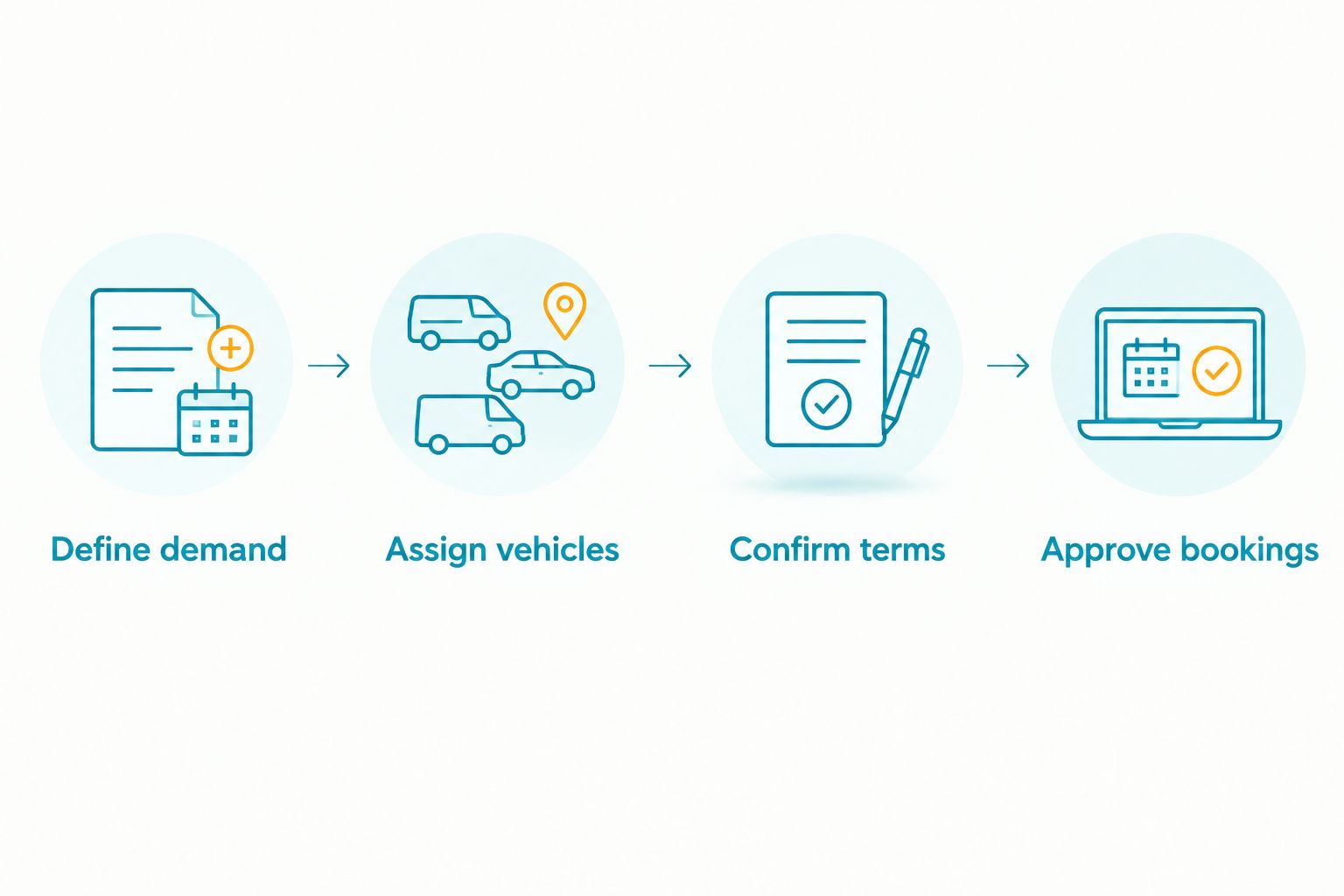
Use this sequence before approving the arrangement:
- Define demand. List the journeys, passengers, luggage and dates that require transport, including trips that happen simultaneously.
- Assign vehicles. Describe each assignment separately, including pickup point, destination, rental duration and self-drive or with-driver preference.
- Confirm terms. Ask whether the provider proposes a shared agreement, separate bookings, or another documented structure.
- Approve bookings. Check the written quotation and responsibilities before issuing your company’s approval.
Keeping these steps separate makes the request easier to assess. A company-wide transport requirement is useful context, but the provider still needs enough detail to quote and confirm each assignment.
What should “one corporate account” actually cover?
Before comparing proposals, write down what your company means by an account. An administrator might mean a central booking contact, while finance means a particular billing arrangement. Those are different requests.
Company-level coordination
Name the company requesting the rentals, the person coordinating them and the person authorised internally to approve changes. Give the provider a clear route for questions. Ask what company information and supporting documents it requires rather than preparing an assumed document list.
Central coordination gives employees one internal point of contact. Its limitation is that urgent changes can become difficult if that person is unavailable, so nominate an internal backup and explain the approval boundaries.
Vehicle-level records
Keep a separate record for every requested vehicle, even when the enquiry goes through one contact. Include its intended user or passenger group, journey dates, service type and destinations. For self-drive assignments, ask how proposed drivers must be identified and approved.
Company approval does not replace the provider’s driver approval. Do not treat a shared corporate arrangement as permission for employees to swap cars or take turns driving without checking the rental terms.
Commercial documentation
Ask how quotations, agreements, payment requirements and billing documents will relate to each vehicle. If your finance team needs department references or a particular company name on documents, state that before approval. Request confirmation rather than assuming the provider can follow every internal purchasing requirement.
One coordinated enquiry can still result in separate rental documents. Assess whether the proposed structure meets your company’s needs instead of judging it only by whether the provider calls it an account.
Which rental arrangement fits each assignment?
Choose the service for the journey, not simply for administrative uniformity. An employee’s recurring vehicle requirement is different from transport for visiting colleagues with a fixed meeting itinerary. Your enquiry should explain both without assuming they must use identical arrangements.
| Arrangement | Best for | Practical benefit | Booking consideration |
|---|---|---|---|
| Self-drive rental | Employees who need to drive themselves | The approved driver handles the journey directly | Confirm driver requirements and vehicle-use terms |
| Car rental with driver | Business passengers who do not want to drive | Passengers do not need to take responsibility for driving | Provide pickup instructions, stops and the intended schedule |
| Corporate/long-term rental | Recurring company vehicle requirements | The enquiry can address an ongoing requirement rather than an isolated trip | Define the duration, assignments and process for requesting changes |
These are service choices, not confirmed account tiers. Corporate/long-term describes the business requirement and rental duration; it does not by itself establish whether driving is included.
VPI Cars offers these rental services, including support for out-of-town Luzon travel. Ask whether the proposed corporate car rental arrangement can include the combination you need, and request the relevant terms for each assignment.
For a 2026 transport plan, distinguish confirmed recurring work from occasional requests. That gives the provider a clearer brief without committing your company to journeys that have not been approved internally.
Why multi-car arrangements vary
The appropriate arrangement depends on what the cars must do. These factors belong in the initial request because they define the work being quoted:
- Passenger numbers: State the people travelling on each assignment, not just the total headcount across your company.
- Itinerary: Identify pickup points, destinations, intermediate stops and whether separate teams travel at the same time.
- Rental duration: Distinguish an individual journey from recurring use or a longer-term vehicle requirement.
- Driving arrangement: Specify which assignments need a driver and which are intended for approved self-drive users.
- Vehicle requirements: Describe luggage, equipment and other practical needs without assuming a particular model will be assigned.
- Geographic scope: Include Metro Manila and any out-of-town Luzon destinations in the brief so the quotation addresses the intended route.
A company total alone does not explain the requirement. Several cars travelling together on the same itinerary need a different brief from separate employees travelling to unrelated destinations.
What should you include in a multi-vehicle quotation request?
Send one organised request with a separate entry for each assignment. You do not need to design a complicated procurement form; the goal is to make the proposed work unambiguous.
Describe the company requirement
Explain who is travelling and why: recurring meetings, company vehicle assignments, staff transport, site visits or visiting business guests. Include the expected start and end dates. Mark dates that remain provisional so they are not mistaken for approved bookings.
List each vehicle assignment
For every requested vehicle, provide the pickup location, intended destinations, passenger count, luggage or equipment needs, and rental duration. State whether the requirement repeats and whether a driver is needed. Use a consistent assignment name so later discussions refer to the same journey.
Identify approval and billing requirements
Name your booking coordinator and explain who can approve the company’s request. Separately, ask the provider what billing and payment arrangements it can offer. An internal purchase approval is not evidence that the provider has accepted credit terms or another requested payment process.
Ask for an explicit response
Request a quotation that identifies the proposed scope, inclusions, exclusions and conditions requiring further confirmation. Ask how changes, extensions and additional vehicles would be requested. Do not interpret silence on an item as acceptance.
When your brief is ready, contact VPI Cars with the assignment details and ask how the company-level arrangement would work. A useful enquiry asks for both the transport proposal and the account structure—not just a vehicle total.
Request a multi-vehicle quotation
Share passenger numbers, itineraries, dates and driving requirements for each vehicle assignment.
Can different employees use cars under the same company arrangement?
Different employee assignments should be listed individually and checked against the provider’s terms. A corporate booking identifies the business customer; it does not establish who is permitted to drive every vehicle. For self-drive rentals, submit the proposed users and ask what approval each driver requires.
For with-driver bookings, distinguish the passenger contact from the company approver. The person meeting the driver needs pickup information, while the person approving the booking needs control over scope and changes. Those roles can belong to different people.
Do not circulate full employee documents through a general group message simply to simplify coordination. Ask the provider how it wants required information submitted, then share it through the agreed process.
Can the arrangement include Metro Manila and provincial Luzon trips?
Metro Manila and out-of-town Luzon travel are supported use cases for VPI Cars. Include the full itinerary when requesting a corporate arrangement, including provincial destinations and any overnight requirements. Confirm individual journeys, dates and vehicle needs before treating them as booked.
A destination in the proposed itinerary does not establish a pickup branch there. Specify where the vehicle and passengers need to meet, and ask the provider to confirm the proposed starting and finishing arrangements.
If your company is planning recurring provincial work in 2026, describe the pattern as well as the next journey. Separate firm dates from anticipated trips so your transport request remains accurate.
What should finance check before approving multiple rentals?
Check how the paperwork connects to each assignment. Finance should be able to match the approved request, the provider’s quotation and the agreed rental scope without relying on a colleague’s memory.
Before approval, clarify:
- The company name and details to appear on the documents.
- Whether the proposed documentation groups assignments or treats them separately.
- The payment requirements and any requested terms that need explicit acceptance.
- Which inclusions and exclusions apply to each assignment.
- How changes require approval and how revised documents will be issued.
These are questions for the proposed agreement, not promises about a provider’s systems. Do not assume a corporate arrangement includes consolidated invoicing, expense-system connections or reporting tools unless those features are expressly confirmed.
FAQ
Can my company put several rental cars under one account in Manila?
Your company can request a shared corporate arrangement, but the provider must confirm its account and booking structure. Ask whether the vehicles sit under a common agreement or require separate rental documents.
Does one corporate rental account mean one invoice?
One corporate rental account does not establish a consolidated billing arrangement. Ask how billing documents will be issued and whether that approach meets your company’s finance requirements.
Can we request self-drive and with-driver cars together?
You can include self-drive and with-driver requirements in the same enquiry. Ask the provider to confirm whether the proposed arrangement can cover both and which terms apply to each assignment.
Can employees swap rental cars during the booking?
Do not let employees swap self-drive vehicles without checking the provider’s approval requirements. A company-level arrangement does not by itself authorise every employee to drive every car.
Can VPI Cars support corporate trips outside Metro Manila?
VPI Cars supports out-of-town Luzon travel as well as Metro Manila journeys. Submit the intended destinations, dates, passengers and vehicle requirements for confirmation.
What details should I send for a multi-car quotation?
Send each assignment’s passenger numbers, itinerary, dates, rental duration and self-drive or with-driver preference. Include your company contact and any approval or billing requirements that need confirmation.
Does a corporate arrangement automatically include credit terms?
A corporate arrangement does not automatically establish credit terms. Ask the provider to confirm payment requirements before your company approves the rentals.
One last thing
Count overlapping journeys before counting cars. Different departments can request transport for the same period without realising their schedules overlap. A shared itinerary review helps you explain which journeys genuinely require separate vehicles and which requests still need clarification.
For your 2026 plan, keep one approved assignment list and record changes against it. A clearly defined request is more useful than asking for an account before deciding what that account must cover.
Related guides
- Connect a recurring meeting schedule to monthly chauffeur bookings
- Connect a corporate onboarding checklist to vehicle assignment
- Connect your HR travel policy to a long-term rental account