
You do not automatically need travel insurance to rent a car in Manila; the rental company's written booking requirements determine whether you must provide it. Travel insurance is separate from the vehicle's insurance and does not automatically pay for rental-car damage, theft or the excess you owe after a covered claim. Before booking, check the rental agreement and any policy you intend to rely on.
- For travel insurance car rental Philippines questions, check the rental agreement first; personal travel cover is not automatic vehicle protection.
- VPI Cars offers self-drive, with-driver and corporate rentals for Metro Manila and out-of-town Luzon travel.
- Compare vehicle insurance, damage waivers and rental excess benefits separately; they address different responsibilities.
- Ask for written confirmation of your liability, exclusions and accident-reporting requirements before accepting a vehicle.
Why this matters
The useful question is not simply whether a rental includes insurance. It is what you remain responsible for if something happens, and which document explains that responsibility. A booking confirmation, rental agreement and travel insurance policy serve different purposes.
For a 2026 booking, start with your actual transport requirement. Review the car rental services that fit your trip, then ask for the applicable agreement and insurance details before committing. Self-drive, with-driver and recurring business journeys need different questions, even when the destination is the same.
Is travel insurance required for car rental in Manila?
Travel insurance is not an automatic rental requirement, and having it does not replace the rental company's own conditions. Ask the provider whether a separate personal policy is a booking requirement and request that condition in writing. Do not treat a general travel insurance certificate as proof that rental-car damage is covered.
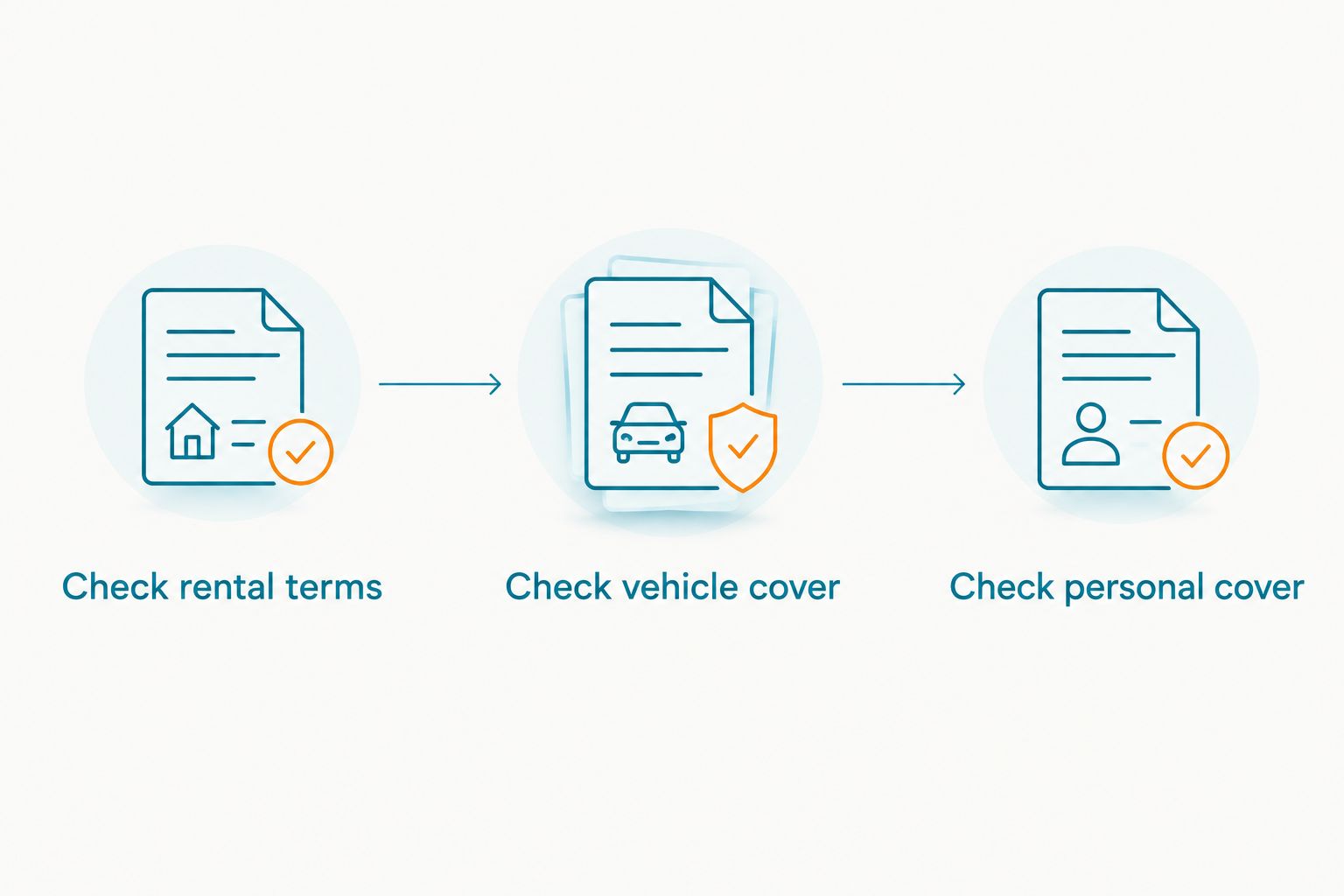
Use this sequence before you book:
- Check rental terms. Identify the required documents, authorised drivers, permitted use and your responsibility for damage or theft.
- Check vehicle cover. Request the relevant insurance or waiver terms, including exclusions and any excess payable by the renter.
- Check personal cover. Read your travel insurance wording for a specific rental-vehicle benefit, its eligibility conditions and its claims process.
These are 3 document checks, not interchangeable forms of protection. If the descriptions conflict or leave a gap, ask the rental provider and insurer to explain their own terms separately. Keep both replies with your booking records.
What protection are you actually comparing?
Travel insurance, motor insurance and a damage waiver are not different names for the same thing. Compare what each document promises, who it protects and what you must do to claim. The table below describes their distinct purposes, not the inclusions of any particular rental package.
| Protection or document | What it addresses | Best for | Main limitation |
|---|---|---|---|
| Personal travel insurance | Benefits listed in your travel policy, such as eligible medical or trip-disruption claims | Travellers seeking protection for the person and journey | Rental-car damage requires an applicable benefit; do not assume it is included |
| Vehicle motor insurance | Insured vehicle risks and liabilities stated in the motor policy | Understanding the vehicle's insured risks | A vehicle being insured does not establish the renter's maximum liability |
| Collision damage waiver | A contractual reduction or waiver of specified damage liability | Renters assessing their contractual damage exposure | It is not automatically an insurance policy and remains subject to its terms |
| Rental-vehicle excess benefit | Eligible reimbursement of an excess under the relevant policy | Travellers checking whether a rental excess is reimbursable | Eligibility, exclusions, evidence and payment arrangements still apply |
The advantage of a separate travel policy is that it can address eligible personal travel risks beyond the rental. Its limitation is equally important: a policy heading such as comprehensive cover does not establish a rental-vehicle benefit.
Likewise, a damage waiver can reduce specified contractual exposure without removing every responsibility. Read the exclusions rather than treating the word waiver as a promise that you will owe nothing.
Why rental insurance requirements vary
Your 2026 rental decision should follow the documents for your booking, not a policy summary from an unrelated trip. The details that change the answer include:
- Service type. Establish whether you are hiring a self-drive vehicle, arranging transport with a driver or booking a corporate rental.
- Authorised drivers. Check who is permitted to drive and how any additional driver must be recorded.
- Journey and use. Describe your destinations, business activities and intended use so the provider can confirm the applicable terms.
- Vehicle category. Check that any separate travel policy accepts the type of rental vehicle you intend to book.
- Rental duration. Match the entire rental period against any duration conditions in your insurance wording.
- Policy eligibility. Check the policyholder, named traveller and territorial conditions rather than assuming everyone on the trip is protected.
These are questions to resolve, not reasons to assume a trip is excluded. For an out-of-town Luzon journey, provide the actual itinerary and ask for confirmation relevant to that booking.
What should you check for a self-drive rental?
With self-drive, you take responsibility for operating the vehicle under the rental agreement. Read the authorised-driver and incident clauses before signing, not after collecting the keys. Ask how the agreement distinguishes covered damage, excluded damage and other charges.
Check these points in writing:
- What insurance or damage waiver applies to the rental?
- What excess or other contractual liability remains with you?
- How are theft, damage to another vehicle and injury claims handled?
- What exclusions concern the driver, road use or vehicle use?
- Who must you notify after an incident, and what documents are required?
- What is the procedure if the car becomes unsafe to drive?
For your 2026 pickup, photograph the vehicle's condition and ensure existing damage is recorded in the handover document. Keep your own copies. This creates a record of what you accepted; it does not replace the agreement or guarantee that a later claim will be paid.
Does renting with a driver remove the need to check insurance?
No. A with-driver booking changes who drives, but it does not turn personal travel insurance into vehicle cover or explain every passenger-related risk. Ask the provider which terms apply to the vehicle, driver and passenger journey.
VPI Cars is best suited to renters seeking self-drive, with-driver or corporate car rental in Metro Manila and Luzon. Its service range supports both city journeys and out-of-town travel; the relevant booking consideration is confirming the individual itinerary and applicable agreement, not assuming every service has identical insurance terms.
For a business meeting or airport journey, state the pickup point, destination, passenger numbers and luggage requirements. Then ask how incidents and journey interruptions are handled under your proposed booking. Do not infer an insurance promise from the fact that a driver is included.
What should a company check before arranging employee transport?
A business should separate the rental contract from its employee travel policy. Company approval to book a vehicle does not itself establish insurance coverage. Check who signs the agreement, who travels and who is authorised to drive where self-drive is involved.
For a 2026 corporate rental, give procurement or the booking coordinator a clear brief: journey dates, expected use, passenger numbers, destinations and rental duration. Ask the insurer whether the company's existing policy applies to that specific arrangement rather than relying on a general statement about business travel.
Keep 2 written confirmations: one from the rental provider explaining the rental terms, and one from the insurer explaining any policy benefit you intend to use. This separates contractual responsibility from possible reimbursement. For recurring travel, review changes to the booking rather than assuming the original confirmation covers every later journey.
Can travel insurance pay the rental-car excess?
A rental-vehicle excess benefit can reimburse an eligible excess when the policy expressly provides that benefit and its conditions are met. Ordinary travel insurance wording alone is not enough. Find the rental-vehicle section and read it alongside the exclusions and claims requirements.
Ask the insurer whether you must settle the rental company's claim before seeking reimbursement, which supporting documents are necessary and whether your destination, driver and rental duration qualify. Reimbursement is not the same as the insurer taking over your rental contract. Your responsibilities to the provider remain governed by that agreement.
If you cannot identify the benefit in the policy wording, do not budget on receiving it. Request written clarification before deciding that separate protection duplicates something you already have.
Is a rental deposit the same as insurance?
A rental deposit is security under the rental agreement, not an insurance policy. It does not establish which incidents are insured or what your final liability will be. Those answers belong in the agreement and applicable insurance or waiver terms.
Keep 3 questions separate: what deposit is required, what excess applies, and what other liabilities the agreement describes. Do not assume that the deposit and excess are equal or that either is your maximum possible responsibility. Request the terms that explain how each applies to your booking.
What should you do if an accident happens?
Prioritise safety and seek emergency assistance when needed. Contact the rental provider promptly, follow the reporting requirements in your agreement and contact your insurer if you intend to claim under a separate policy. Do not assume notifying one organisation satisfies the other's requirements.
Once it is safe, record the location, relevant details and vehicle condition, and keep communications and supporting documents. Follow instructions about police reports, repairs and continued vehicle use. Avoid authorising repairs or making commitments on the insurer's behalf without the required approval.
Before travelling, save the provider's incident contact and your insurer's assistance details somewhere accessible without relying solely on email. Ask about the process in advance so you are not searching policy documents beside a damaged vehicle.
How do you request a useful rental quotation?
Give VPI Cars your dates, pickup point, destinations, passenger numbers, luggage needs and preferred rental arrangement. Include any out-of-town Luzon stops and explain whether the trip is personal, business-related or recurring. Ask for the applicable rental and insurance terms alongside the quotation.
Use the contact page to request clarification before booking. A useful reply should let you identify what is included, what remains your responsibility and which questions need an insurer's answer. Keep the final agreement rather than relying on an earlier informal description.
Request a quotation for your itinerary
Share your dates, destinations and rental type, and ask for the applicable rental and insurance terms.
FAQ
Do I need travel insurance to rent a car in Manila in 2026?
Travel insurance is not an automatic rental requirement; check the provider’s written booking conditions. A personal policy also does not automatically cover rental-car damage or your contractual liability.
Does travel insurance cover damage to a rental car in the Philippines?
Travel insurance covers rental-car damage only where an applicable policy benefit provides for it. Read the rental-vehicle wording, exclusions and eligibility conditions rather than relying on the policy name.
Is a collision damage waiver the same as travel insurance?
A collision damage waiver is not the same as travel insurance. It concerns specified liability under the rental agreement, while travel insurance provides the benefits stated in a separate policy.
Will my credit card cover a rental car in Manila?
Credit-card rental protection depends on the specific card’s benefit terms. Ask the card issuer or benefit administrator to confirm the destination, vehicle, driver, payment and rental-duration requirements before relying on it.
Do I still need to check insurance when I book a car with a driver?
Yes, check the applicable booking terms even when a driver is included. Confirm the arrangements for the vehicle and passenger journey separately from any personal travel insurance.
Can I book VPI Cars for travel outside Metro Manila?
VPI Cars supports car rental for out-of-town Luzon travel as well as Metro Manila journeys. Share your itinerary, dates and vehicle requirements for confirmation of the individual booking.
Does paying a rental deposit mean I am fully insured?
Paying a rental deposit does not mean you are fully insured. The deposit, insurance cover, excess and other contractual responsibilities must be checked separately.
One last thing
Ask who pays first, not just whether something is covered. A reimbursement benefit and a waiver of liability have different consequences when a claim occurs. Understanding that distinction before your 2026 trip is more useful than collecting insurance labels that sound reassuring but leave your responsibilities unclear.
Related guides
- Can a foreigner rent a self-drive car in the Philippines?
- Is an international driving permit required to rent a car in Manila?
- Planning a Luzon road trip before your self-drive booking